
Skip to content

Bill household memberships through a shared payer.

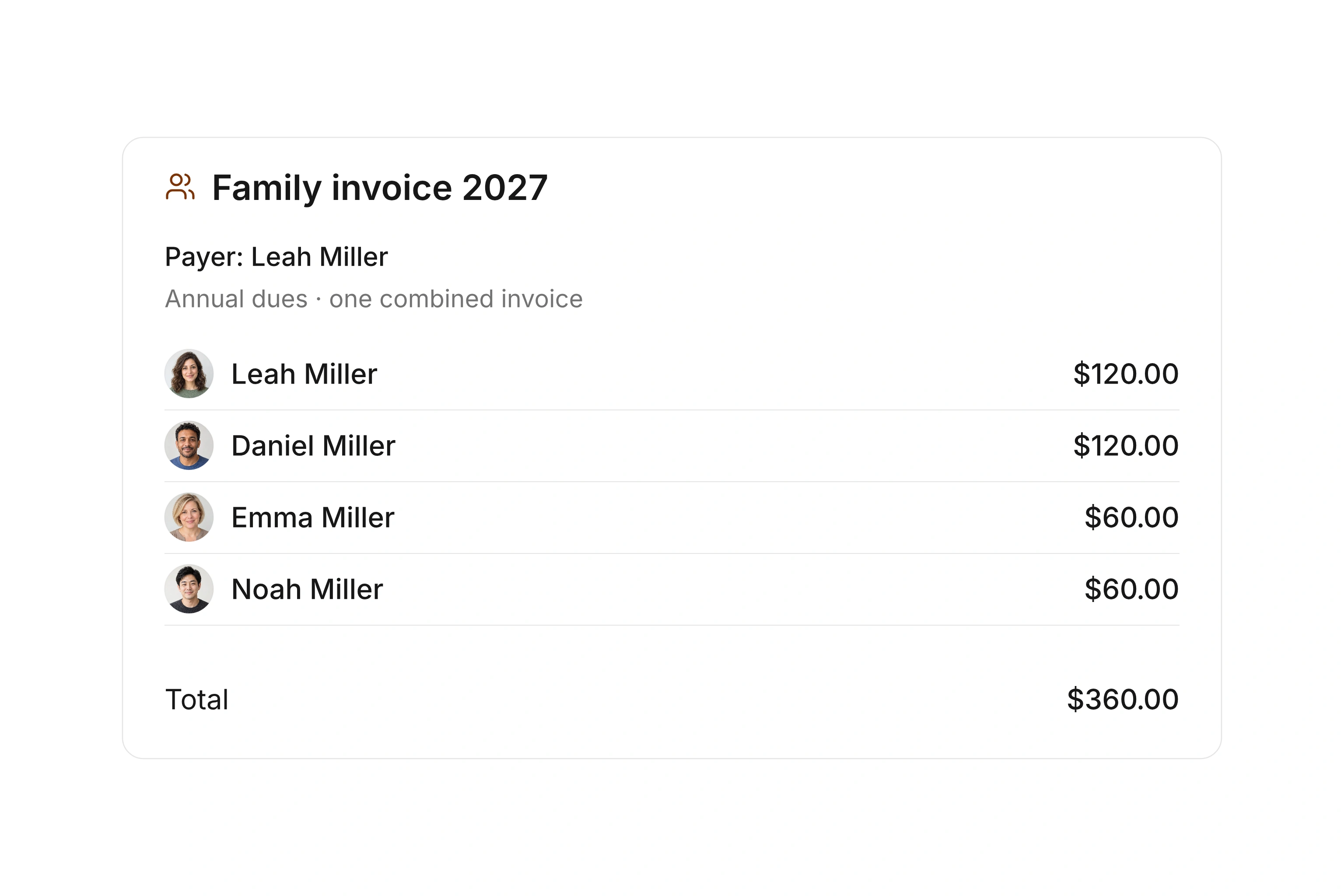
Several people in a household may share one payer. Their subscriptions stay assigned to the individual members in campai. Set the responsible debtor and group eligible charges on one invoice when you process the subscriptions.

Grouped household invoice with subscription line items for several members

Keep the member and payer assignments clear

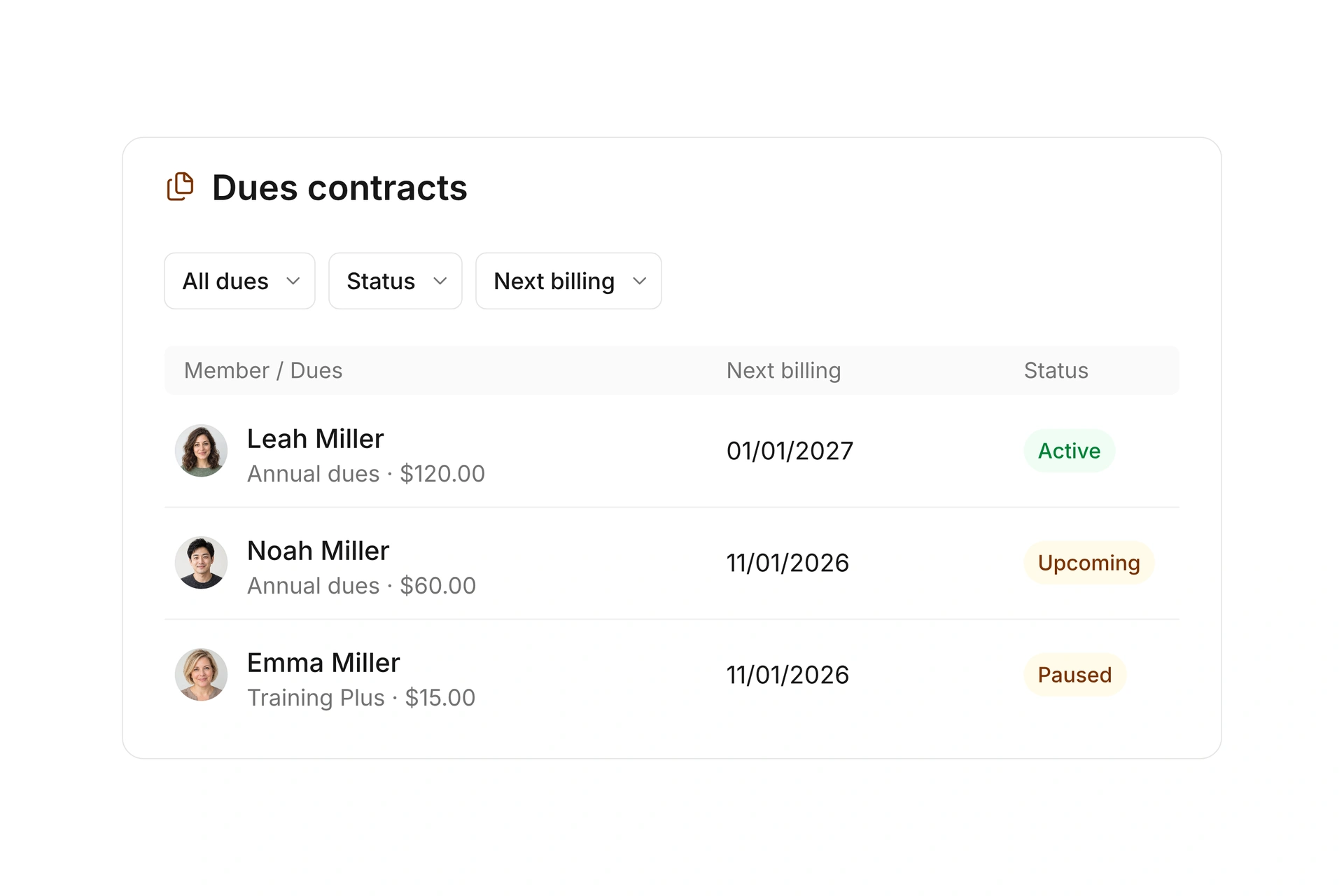
Each member has a subscription with the appropriate settings. The debtor identifies who receives the bill. You can assign children’s subscriptions to a shared payer while keeping the start, options, and covered period on each individual subscription.

Before changing a payer, check which subscriptions the change should affect. A household relationship alone does not set a discount or create a combined invoice. Those outcomes depend on your plan rules and the debtor assigned to the relevant subscriptions.
Group charges that belong on the same invoice

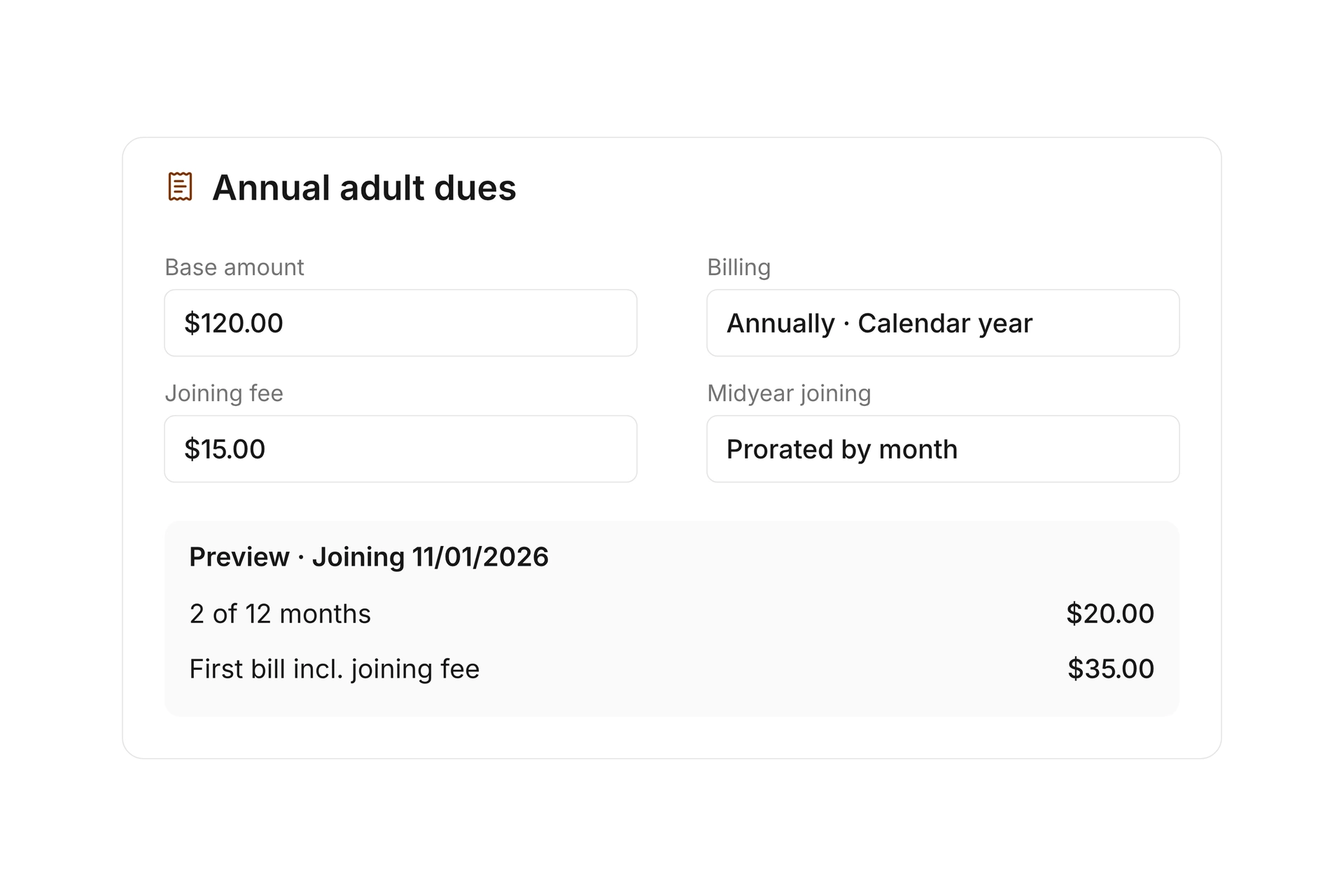
Enable invoice grouping during billing to combine eligible subscription charges for the same debtor. campai checks additional settings before putting the line items together. These include the due date, plan type, net or gross setting, and invoice template.

Different settings can therefore produce more than one invoice even when the same person pays. Review this situation when household members use different programs or plans. Grouping invoices preserves the underlying subscription rules; it does not change the amounts those rules calculate.

Group charges that belong on the same invoice

Make each member’s charges recognizable

Choose when contact names appear in invoice details, including an option for grouped invoices. The payer can then identify the member associated with each line item. Individual subscriptions and billing periods explain how the combined total was calculated.

Start with draft invoices when you set up a new household arrangement. Review the names, line items, and recipient together before finalizing. Payment status belongs to the resulting invoice, while each member’s subscription continues to define future charges. Use your configured online payment options for the payment workflow.

Make each member’s charges recognizable

Prepare a household for its next bill

Start with each member’s subscription, then review how the eligible charges appear together.

  1. Review the subscriptions

    Check the plan, covered period, and selected options for each household member. Apply any agreed discount through the appropriate subscription rules.

  2. Assign the payer

    Assign the relevant subscriptions to the same debtor. Review the billing address, delivery settings, and payment arrangement against the agreement with that payer.

  3. Choose invoice grouping

    Enable grouping for the billing run. Use drafts for the first review and check which subscriptions have compatible settings for a shared invoice.

  4. Check the line items

    Match the names and periods to the subscriptions. Resolve separate invoices and recipient details before finalizing or sending the billing documents.

When do charges share an invoice?

A household has three subscriptions. Two fit the current grouped invoice; the third has a different due date.

SubscriptionDebtorDue dateResult
Alex, annual membershipJordan ParkerJanuary 15, 2027Grouped invoice A
Maya, annual membershipJordan ParkerJanuary 15, 2027Grouped invoice A
Noah, additional programJordan ParkerFebruary 1, 2027Separate invoice B

Invoice A also requires compatible settings beyond the due date. Sharing a debtor alone is not enough.

Frequently asked questions

Does campai automatically combine every household invoice?

No. Grouping applies to eligible subscription charges in the billing run. They must share the same debtor and compatible billing settings.

Can the payer see which member each charge belongs to?

Yes. Use the contact-name setting for invoice details to display names on grouped invoices.

Does a shared invoice automatically apply a family discount?

No. Your subscription plan, its adjustments, and each subscription’s settings determine the charge. Invoice grouping does not create a discount.

Why would one payer receive separate invoices?

Charges may differ in due date, invoice template, net or gross setting, or another grouping requirement. campai keeps those invoices separate even when the debtor is the same.

What if a different person will pay next time?

Review and update the debtor assignment for the affected subscriptions before the next billing run. Review existing invoices separately rather than assuming their recipient changes retroactively.

Review your household billing setup

Bring a typical household with several subscriptions. We can walk through payer assignments, grouping, and the resulting invoice details.

Explore on your own. Get personal help when you need it.