
Volunteer Recruitment: How to Find, Screen and Onboard Volunteers
Plan volunteer recruitment step by step: role descriptions, outreach channels, screening and background checks, onboarding, the first 90 days and a checklist.
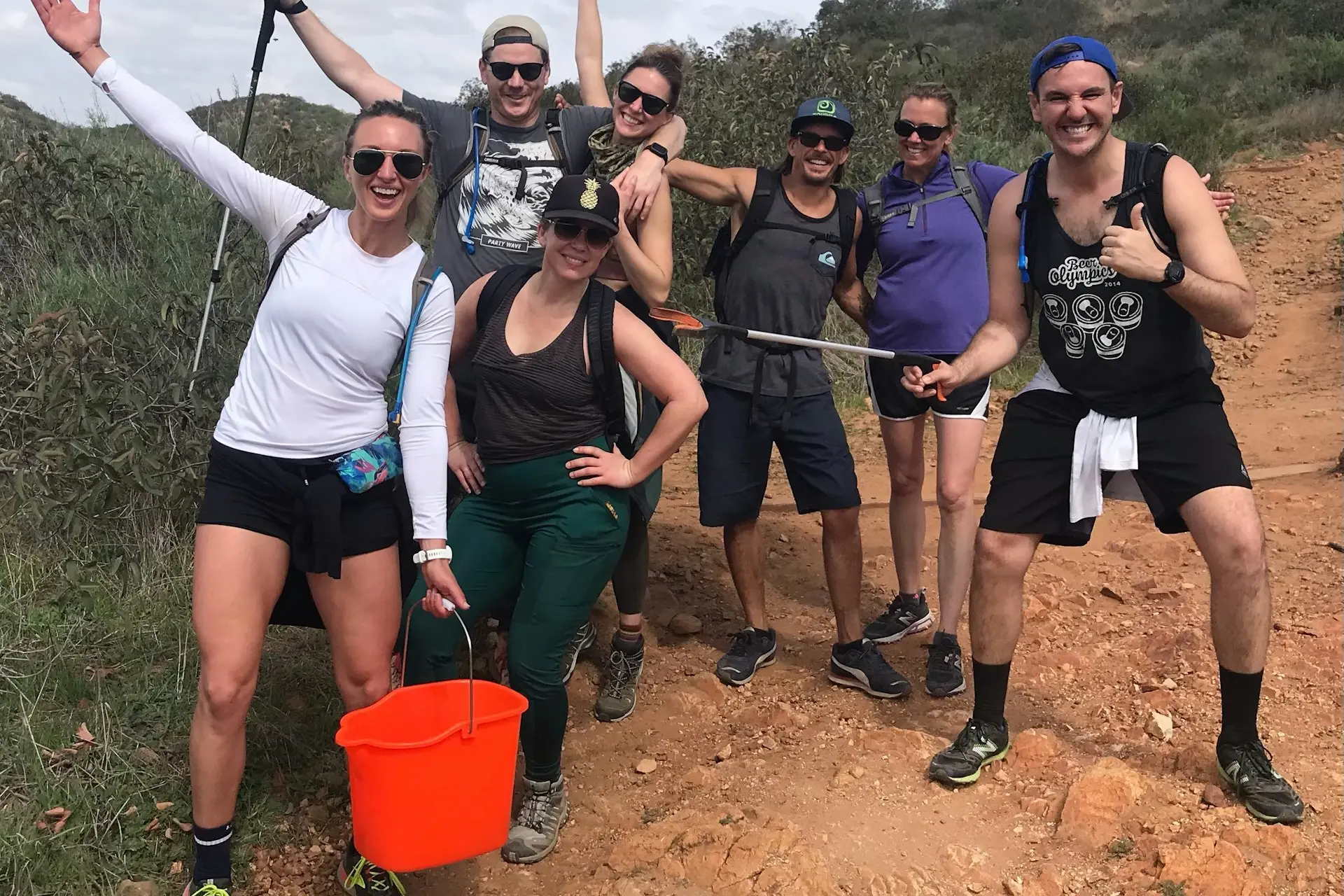
A neighborhood food pantry runs Saturday distribution with the same five people every week. In March it posts a volunteer call on social media, gets 30 enthusiastic comments and sees four new faces in April. By June, one of them is still coming. The problem is rarely a lack of goodwill. It's that volunteer recruitment was treated as a single announcement instead of a process: clear roles, the right channels, a fast reply, screening that fits the role and a first month that makes people want to come back.
This guide walks through that process in order, from planning and role descriptions to channels, screening, onboarding, the first 90 days and retention, and ends with a recruitment checklist you can copy.
It's written for US nonprofits, clubs, associations, booster clubs, faith communities and other member-based organizations recruiting program and event volunteers. If you're looking for board members instead, see our guide to building a nonprofit board of directors.
Plan Before You Post Anything
An appeal that goes out before anyone has decided what volunteers will do, who will answer them or when they'll start usually wastes the interest it creates. Settle those questions first.
Answer Five Planning Questions
- Who owns recruitment? Name one volunteer coordinator, paid or unpaid. Program leads tell the coordinator what they need; the coordinator runs the pipeline and answers inquiries.
- What work needs doing? List tasks by program. "Sort donated food on Saturdays from 8 to 11 AM" is a task. "Help at the pantry" isn't.
- When and where? Note recurring shifts, one-time events, seasonal peaks and tasks that can be done remotely.
- How many people? Work this out from shifts, not gut feeling (see the example below).
- What skills and screening does each task need? Driving, handling cash, working with children or lifting 40 pounds each changes who you recruit and how you screen them.
Work Out How Many Volunteers You Need
Count shift slots, then divide by how often a typical volunteer can realistically show up. Here's a worked example for the pantry:
- Saturday distribution needs 12 people per shift: four stations with three people each.
- With about four Saturdays a month, that's 48 shift slots a month.
- Regulars average two Saturdays a month, so you need 48 ÷ 2 = 24 active volunteers.
- Add a 20% buffer for illness, travel and holidays: about 29 active volunteers.
- You have 11 today, so you need 18 more.
Next, use your own history to estimate how many inquiries that takes. If roughly one in three people who signed up last year became regulars, plan for about 54 inquiries. If you don't know your ratio yet, start tracking it now. It will be the most useful planning number you have next year.
Build a Recruitment Calendar
Recruitment works better as a steady rhythm than as an emergency appeal. Put three things on the calendar each year: a planning review in January (last year's numbers, updated role descriptions, targets by program), a recruitment push six to eight weeks before each seasonal peak, such as spring programs, fall programs and the holidays, and a thank-you and feedback round in April during National Volunteer Week and again in December.
The six-to-eight-week lead time matters. Anything shorter leaves no time for screening, orientation or training, and the new volunteer's first shift becomes a scramble.
Write Role Descriptions People Can Say Yes To
People commit to work they can picture. A good role description answers the questions a prospect would otherwise have to ask, and it doubles as your screening and training guide.
What Every Role Description Includes
Cover eight points: a title and purpose in one or two sentences, three to six specific tasks, the time commitment (hours per shift, shifts per month and a minimum term), the location or remote option, requirements such as age, physical demands or a driver's license, the screening you'll do, the training and support you'll provide, including who the volunteer reports to, and what the volunteer gets, such as new skills, a reference or a service-hour letter for students.
Sample Role Description
Role: Saturday Distribution Lead
Purpose: Keep Saturday food distribution running smoothly so every household is served with dignity and without long waits.
Tasks: Open the site at 7:45 AM with the site manager. Brief the shift team and assign stations. Solve problems at the line. Record households served on the tally sheet. Close out with the site manager.
Time: Two Saturdays a month, 7:45 to 11:30 AM, for at least six months.
Requirements: Age 21 or older. Comfortable directing a team of 12. Able to stand for three hours.
Screening: Short application, a 20-minute conversation and two references.
Training: One 60-minute orientation and two shadow shifts with an experienced lead.
Reports to: The pantry operations coordinator.
Offer Different Sizes of Commitment
Not everyone can give two Saturdays a month. A ladder of commitment levels lets people try you out before signing up for more, and many of your future leaders will start with a single shift.
| Commitment | Example | Good for | Screening level |
|---|---|---|---|
| One-time | Setup crew for a 5K, food drive sorting | First-timers, groups, employee service days | Low |
| Short project | Redesign a flyer, update the volunteer handbook | Skilled professionals with limited time | Low to medium |
| Ongoing shifts | Weekly tutoring, Saturday distribution | People who want routine and community | Medium to high |
| Leadership | Shift lead, event captain, committee chair | Experienced volunteers ready for more | Medium to high |
Our list of member engagement ideas includes more small first steps, such as a menu of tasks that take 30 minutes or less.
Choose Recruitment Channels That Fit the Role
A broad appeal fills a one-day event. A targeted, personal ask finds the retired accountant who will review your books every month. Match the channel to the role.
| Channel | Best for | Effort | Tip |
|---|---|---|---|
| Personal asks from current and former volunteers | Ongoing roles | Low | Invite people to a specific shift, not a general update |
| Members, participants and their families | All roles | Low | Add a "Would you like to help?" question to registration and renewal forms |
| Your website's volunteer page | All roles | Medium | List open roles with dates and a short sign-up form |
| Email to supporters | Events, seasonal pushes | Low | Segment by interest and past activity |
| Social media | Events, one-time roles | Medium | Show real volunteers at work, with their permission |
| Local employers | Group service days, skilled projects | Medium | Offer a ready-made team project on a fixed date |
| High schools, colleges and service-learning programs | Episodic and seasonal roles | Medium | Confirm age rules and how you'll document service hours |
| Faith communities and civic clubs | Ongoing and group roles | Medium | Ask for five minutes at a meeting and bring sign-up cards |
| Local volunteer centers and matching websites | One-time and ongoing roles | Medium | Keep listings current and reply within two business days |
Pick two or three channels per role and do them well. For event-day staffing, our guide on how to plan an event shows how to count volunteer shifts from your run of show.
Write a Recruitment Message That Gets Replies
The best recruitment messages are specific, personal and easy to answer. Name the role, the time, what the person will do and what happens next. Personalize where you can: a message to a former volunteer should mention when they last helped.
Subject: Can you help on Saturday mornings this spring?
Hi Jordan,
Last fall you helped us sort more than a ton of food at the harvest drive. Thank you. This spring we're serving more families on Saturday mornings, and we need eight more people for the distribution team.
The role is two Saturdays a month, 8 to 11 AM, at our Elm Street site. You'd greet families, pack orders or restock the line, and we'll train you on your first shift.
If you're interested, reply to this email or choose a date on our sign-up page. I'll confirm within two days.
Thanks, Sam Patel, Volunteer Coordinator
To fit volunteer asks into your wider schedule of emails and newsletters without overloading people, use a member communication plan.
Reply Within Two Business Days
Interest fades fast. Answer every inquiry within two business days with the next step and a date. Track each person through simple stages: inquiry, application, screening, orientation, first shift, active.
If you already keep a member database, add volunteers there instead of starting a separate spreadsheet. In campai, for example, you can record interests and volunteer roles in custom fields and tags on each member profile, save a filter such as "applied but not yet screened" and set follow-up reminders so nobody waits a week for an answer.
Applications and Screening
Screening protects the people you serve, your volunteers and your organization. It should be proportionate: thorough for sensitive roles, light for low-risk ones.
Keep the Application Short
Ask only for what the role requires: contact details, availability, interests, relevant skills, an emergency contact for on-site roles and consent to the screening steps that apply. Ask about age only where a role has an age requirement, and collect anything else after the first conversation.
Match Screening to the Role's Risk
| Risk level | Example roles | Screening steps |
|---|---|---|
| Low | One-time event help, mailings, supervised group projects | Application, orientation, supervision on site |
| Medium | Ongoing shifts, access to member contact data, phone outreach | Add a conversation and one or two reference checks |
| High | Work with minors or vulnerable adults, handling cash, driving people, overnight trips | Add a background check, a driving record check where relevant, signed policies and closer supervision at first |
Write these rules into a short screening policy approved by your board and apply it consistently. Screening everyone in the same role the same way is fairer to applicants and easier to explain.
Background Checks: What to Know
Background checks make sense for roles with unsupervised access to children or vulnerable adults, money or sensitive data. Before you start, know these points:
- Federal consumer reporting rules may apply. If you order checks from a background screening company, the Fair Credit Reporting Act governs reports used "for employment purposes." The FTC's 2011 staff report on the FCRA reads that term broadly enough to include a nonprofit staffed in whole or in part by volunteers. In practice, follow the steps the FTC describes for employers using background checks: a standalone written disclosure, the applicant's written permission and specific notices before and after you turn someone down based on the report. Ask your screening provider how it supports each step.
- A sex offender registry search is one layer, not a full check. The U.S. Department of Justice runs the Dru Sjodin National Sex Offender Public Website, which searches state, territorial and tribal registries in one place. It's useful, but it doesn't replace a criminal background check, references or an interview.
- State law and your insurer may add requirements. Some states set their own rules for people who work with children in youth programs, and insurance policies often specify which checks you must run. Check both before you write your policy.
- Screening is only one part of child protection. The CDC's guidance on preventing child sexual abuse within youth-serving organizations lists screening and selecting employees and volunteers as one of six components, alongside guidelines for interactions, monitoring behavior, safe environments, responding to concerns and training.
Keep results confidential, limit access to one or two people and store only the outcome (cleared, date, re-check due) in your general volunteer records. Set a re-screening interval in your policy, such as every two or three years, and follow it. This is general information, not legal advice; for questions about your situation, talk to an attorney or your insurer.
Have a Short Conversation
For medium- and high-risk roles, a 15- to 20-minute conversation in person or by video helps both sides decide. Useful questions:
- What drew you to this role, and what do you hope to get out of it?
- Which shifts can you realistically commit to over the next three months?
- How would you handle this situation? (Describe a realistic moment from the role.)
- Is there anything that would make this role work better for you, such as accessibility needs or schedule limits?
Say No Kindly When the Fit Isn't Right
Not every applicant fits every role. Offer another role where you can, and keep the message short and warm:
Thank you for applying to be a youth tutor. We've filled this round of tutor roles with volunteers whose availability matches the program schedule. We'd still love your help: our Saturday sorting team has openings, and no experience is needed. Would you like me to save you a spot?
If a background check report is the reason for a decision, use the FCRA notice steps described above instead of this template.
Onboard New Volunteers So They Come Back
Volunteer onboarding covers everything between "yes" and the point where a volunteer can do the role with confidence. It's where most early drop-off happens, so plan it as carefully as recruitment. The principles mirror a member onboarding process, but volunteers need more role-specific training and a named person to ask.
Before the First Shift
- Send a welcome email within one business day of acceptance: role, first date, address, parking, what to wear and whom to ask for on arrival.
- Collect signed policies, such as a code of conduct, confidentiality and photo consent, before day one.
- Assign a buddy: an experienced volunteer who works the first two shifts alongside the newcomer.
- Add the volunteer to the right team list or group chat so updates reach them from the start.
A 60-Minute Orientation Agenda
| Minutes | Topic |
|---|---|
| 0–10 | Welcome, introductions and the mission in plain words |
| 10–20 | Who you serve and what a good day looks like |
| 20–35 | Policies that matter: safety, confidentiality, child protection, how to report a concern |
| 35–50 | Walkthrough of the role, tools and supplies |
| 50–60 | Questions, schedule confirmation and how to cancel a shift |
Run orientation monthly or at the start of each season, and record a short version for people who can't attend live.
Role Training: Show, Do, Check
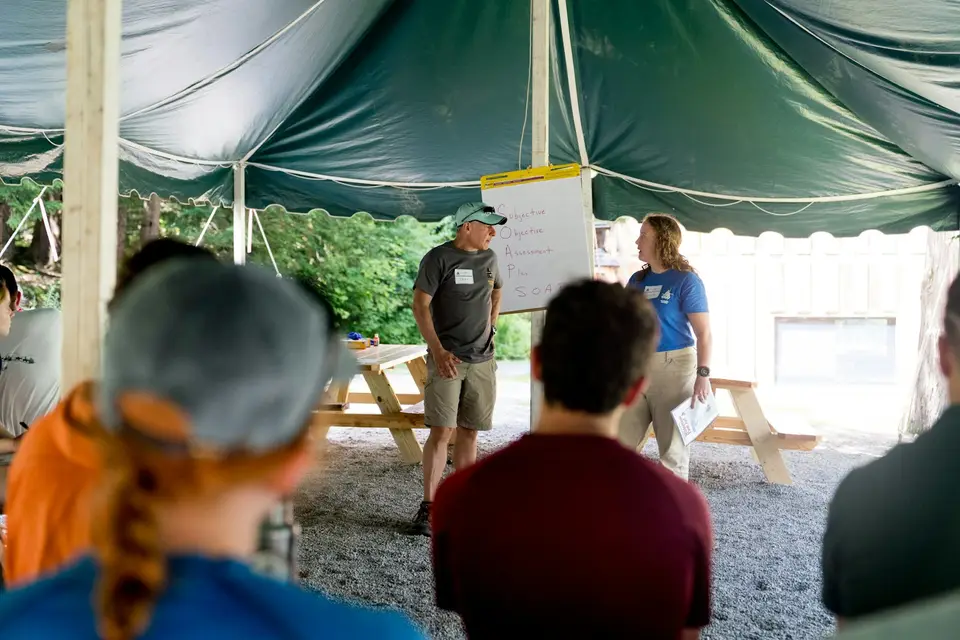
Train in three steps. Show the task, let the volunteer do it while the buddy watches, then check in after the shift. A one-page quick reference for each role helps more than a 30-page handbook nobody reads.
A shared space for updates matters as much as the training. With the campai Community App, for example, a volunteer team can have its own team space with chat, so shift leads can post changes and newcomers can ask questions without hunting for phone numbers.
The First 90 Days
The first three months decide whether a new volunteer becomes a regular. Plan a light but deliberate sequence of contacts.
| Period | Goal | What the coordinator does |
|---|---|---|
| First shift | Feel welcome and useful | Greet them by name, introduce the buddy, thank them before they leave |
| Days 1–7 | Fix early friction | Send a short check-in: what went well, what was confusing |
| Days 8–30 | Build confidence | Schedule two to four shifts, keep the same buddy or lead where possible |
| Days 31–60 | Confirm the fit | Have a 10-minute conversation: more, less or a different role? |
| Days 61–90 | Make them part of the team | Recognize their contribution, invite them to a team gathering, ask for a referral |
Track first-shift show rate and 90-day retention by recruitment channel (see the metrics below), and you'll learn where your committed volunteers actually come from.
Retention Basics
Recruiting takes a lot of coordinator time. Keeping the volunteers you have takes less. The basics:
- Respect their time. Publish schedules early, start and end shifts on time and cancel unneeded shifts well in advance.
- Show impact. Share concrete results, such as "Saturday's team served 186 households."
- Thank people specifically and often. Our member appreciation ideas include a volunteer thank-you template.
- Offer growth. Shift lead, trainer, committee seat. Some volunteers will become future officers, so connect this work to your board succession planning.
- Ask and listen. Run a short survey twice a year and hold an exit conversation when someone steps back.
- Spread the load. When the same few people do everything, break big jobs into smaller roles before they burn out.
Measure and Report
| Metric | How to calculate | Why it matters |
|---|---|---|
| Inquiry-to-active rate | Active new volunteers ÷ inquiries in the period | Shows how well your pipeline converts |
| First-shift show rate | First shifts attended ÷ first shifts scheduled | Flags gaps between acceptance and day one |
| 90-day retention | New volunteers active at day 90 ÷ new volunteers who started | Measures onboarding quality |
| Annual retention | Last year's volunteers still active this year ÷ last year's active volunteers | Measures long-term satisfaction |
| Volunteer hours | Total hours recorded | Basis for reports to your board and funders |
To express volunteer time in dollars, Independent Sector publishes a national value of volunteer time estimate, preliminarily $36.14 per hour for 2025. If 29 volunteers each give six hours a month, that's 2,088 hours a year, worth about $75,460 at that rate. Use it to show contribution in reports; it isn't a donation the volunteers can deduct.
Volunteer Recruitment Checklist
Copy this list into your planning document and assign an owner to each line.
Plan and prepare
- Name a volunteer coordinator and a backup.
- List tasks by program and calculate the active volunteers you need, plus a 20% buffer.
- Approve a screening policy by role risk level.
- Write a role description for each role, with one-time, project, ongoing and leadership options.
- Update your website's volunteer page and prepare an email, a social post and a one-minute pitch.
Recruit and screen
- Ask current and former volunteers for personal referrals, and add a volunteer question to registration and renewal forms.
- Contact two or three partners: employers, schools, faith communities or civic clubs.
- Reply to every inquiry within two business days.
- Hold conversations and check references for medium- and high-risk roles.
- Run background checks where your policy requires them, following FCRA steps, and record outcomes securely.
Onboard and retain
- Send the welcome email, collect signed policies and assign a buddy before the first shift.
- Hold orientation and role training.
- Check in after the first shift and at 30, 60 and 90 days.
- Track show rate, 90-day retention and hours by channel.
- Thank volunteers specifically and review the program each December.
Frequently Asked Questions
When is the best time to recruit volunteers?
Year-round, with focused pushes six to eight weeks before each seasonal peak, such as fall programs, holiday drives or a spring event. Recruiting just before you need people leaves no time for screening and orientation, which hurts show rates and retention.
How can a small organization recruit volunteers with no budget?
Start with the cheapest channels, which are often the most effective: personal asks from current volunteers, former volunteers, your members and their families, and partner organizations. A clear volunteer page on your website and a fast reply to every inquiry cost nothing but time.
Do all volunteers need a background check?
No. Match screening to the role's risk. One-time, supervised event helpers usually need an application and an orientation. Roles involving unsupervised contact with minors or vulnerable adults, money or driving call for a background check, following your policy, your insurer's requirements and any state rules that apply.
Can we pay volunteers a stipend or give them perks?
Be careful. The Department of Labor's fact sheet for nonprofits explains that people who volunteer freely for public service, religious or humanitarian purposes, without expecting or receiving compensation, generally aren't employees under federal wage law, and that paid employees can't volunteer to do the same type of work they're paid for. Before offering stipends, gift cards or other payments, ask an employment attorney.
Can volunteers deduct their expenses?
According to IRS Publication 526, volunteers can't deduct the value of their time. They may be able to deduct certain unreimbursed out-of-pocket costs directly connected to the volunteer work, such as travel to and from the site, and the 2025 edition sets a standard rate of 14 cents a mile for car use. Volunteers should check the publication or a tax professional for their situation.
Next Steps
- This week: Name your volunteer coordinator, list every task by program and calculate how many active volunteers you need.
- Within two weeks: Write role descriptions for your three most urgent roles and approve a screening policy by risk level.
- Within a month: Update your website's volunteer page, send personal asks to current and former volunteers and schedule your next orientation.
- Every quarter: Review inquiry-to-active rate, first-shift show rate and 90-day retention by channel, and drop the channels that don't produce regulars.
If you run a nonprofit and want volunteer roles, member records and team communication in one place, see how campai supports nonprofits.