
How to Moderate a Panel Discussion: A Moderator's Playbook
Moderate a panel discussion with confidence: preparation, question design, a 60-minute rundown, audience Q&A and scripts for difficult moments.
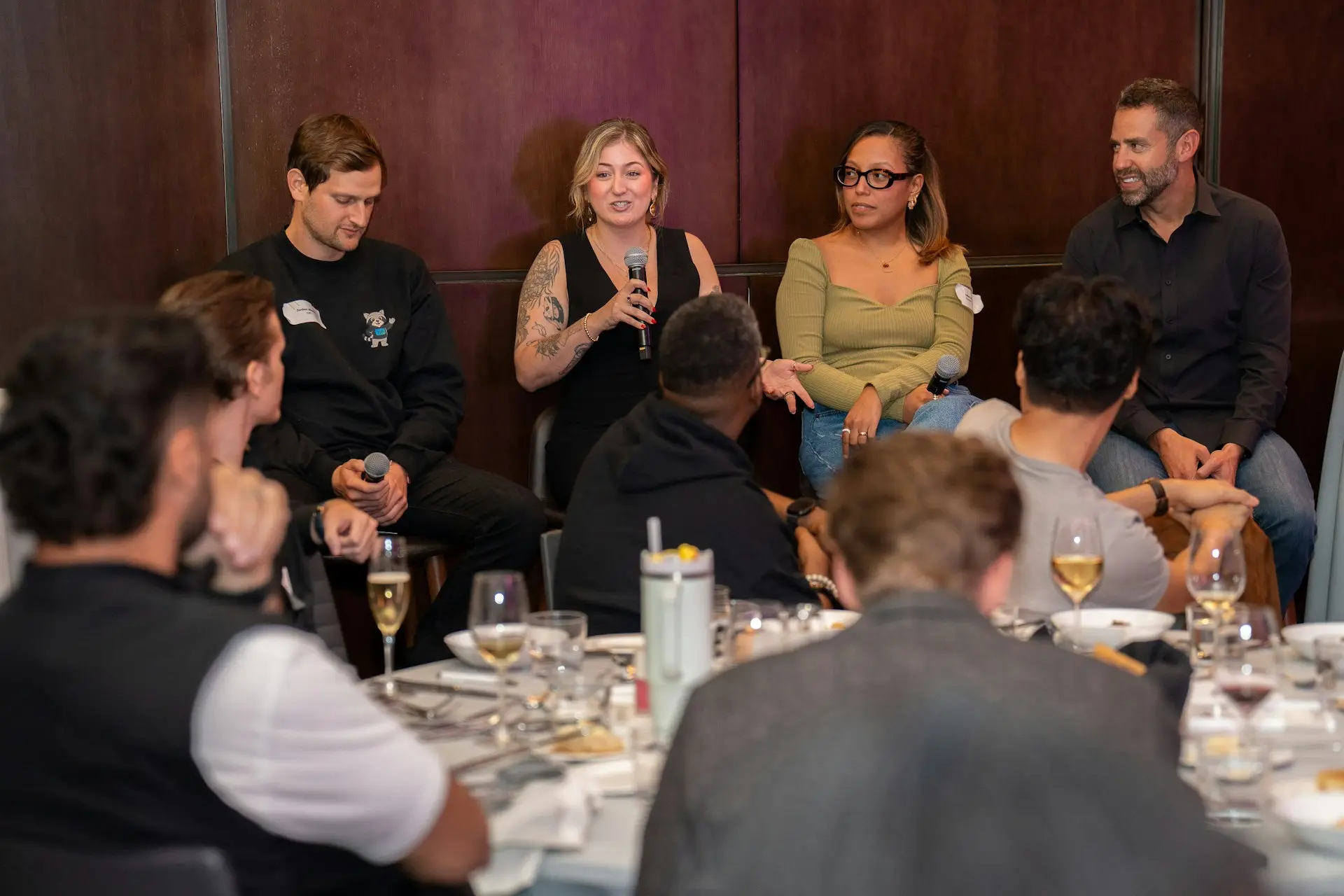
The chamber's annual luncheon has a 45-minute panel on hiring and keeping workers: a hospital HR director, a restaurant owner and a community college dean. You've been asked to moderate. You know the topic, you know two of the panelists, and you have three weeks. What does a good moderator actually do?
A panel discussion moderator designs the conversation, introduces the panelists, asks the questions, keeps time, brings in the audience and steps in when things go off track. The moderator isn't a fourth panelist. The job is to make the hour useful for the audience, which mostly happens in preparation: a clear purpose, a short pre-call with each panelist, a question plan with a beginning, middle and end, and a rundown with times.
This guide covers that preparation, question design, a minute-by-minute rundown, audience Q&A and scripts for difficult moments, for moderators at association conferences, chamber events, nonprofit forums and club meetings.
What a Panel Moderator Does
A moderator plays five roles during a panel, often at the same time:
- Designer: Shapes the arc of the conversation and the questions before the event.
- Host: Welcomes the audience, introduces the panelists and makes everyone comfortable.
- Advocate for the audience: Asks the follow-up the audience is thinking, and asks for examples when answers turn abstract.
- Timekeeper: Keeps answers short, protects the Q&A time and ends on time.
- Referee: Balances airtime, handles disagreement and redirects sales pitches or tangents.
What a moderator doesn't do: give long opinions, answer questions first, or read panelists' full bios aloud. A good test is talk time. Aim for the moderator to speak no more than about 10% to 15% of the session, including introductions.
Prepare Over Three to Four Weeks
Most of a panel's quality is decided before anyone sits down. Use the weeks before the event to set the purpose, learn about each panelist and plan the room.
Agree on the purpose with the organizer
Ask the event organizer these questions before you contact any panelist:
- Who is the audience, how many people, and what do they already know about the topic?
- What should the audience be able to do or decide after the panel?
- How long is the session, and how much of it is for audience questions?
- Will it be recorded, streamed or captioned?
- How will audience questions be collected: microphones, cards or an app?
- What's the room setup, and is there a timer the panelists can see?
If you're also the one recruiting panelists, adapt the guest speaker sample in the event invitation letter guide so each person knows exactly what you're asking of them.
Then write the purpose in one sentence: "Local employers leave with three hiring or retention practices that worked for organizations their size." Every question you write should serve that sentence.
Choose the format
Not every panel needs to be four chairs and a moderator asking questions down the line. The format should fit the purpose.
| Format | How it works | Use when |
|---|---|---|
| Moderated conversation | The moderator asks questions and follow-ups, panelists respond to each other | The default for most topics |
| Point and counterpoint | Panelists with different positions respond to the same prompt | The topic has real, respectful disagreement |
| Short talks, then discussion | Each panelist speaks for 5 minutes, then the moderator leads a conversation | Panelists bring distinct case studies |
| Interview style | One main guest plus one or two respondents | One person has the key experience, others add perspective |
| Audience-driven | Questions come mainly from the audience, collected in advance or live | The audience is expert or the topic is new to everyone |
| Fishbowl | An open chair lets audience members join the panel briefly | Small, engaged groups and community discussions |
Three or four panelists is a workable number for a 45 to 60 minute session. With five or more, each person gets only a few minutes and the conversation turns into a sequence of statements.
Hold a pre-call with each panelist
A 15 to 20 minute call with each panelist two to three weeks before the event gives you the material for good questions. Ask:
- What's your main point of view on this topic, in one or two sentences?
- What's a specific story or example the audience would remember?
- Where do you think you'd disagree with the other panelists?
- Is there anything you can't discuss, or a topic you'd prefer to avoid?
- How do you want to be introduced, and how do you pronounce your name?
Take notes during the call. The stories and disagreements you hear are what make the panel feel like a conversation.
Preparation timeline
| When | Moderator task |
|---|---|
| 3–4 weeks before | Agree on the purpose and format with the organizer; review panelists' backgrounds |
| 2–3 weeks before | Pre-call with each panelist; draft the question plan |
| 1–2 weeks before | Send panelists the themes, the opening question and logistics; optional 30-minute group call |
| 3–5 days before | Finalize questions, introductions and the rundown; prepare cutoff phrases |
| Day before | Check the room setup, microphones and timer with the organizer |
| Day of | Meet panelists 30 minutes early; confirm the order and the closing question |
Plan the stage and room
Small details on stage affect the whole conversation:
- Seating: Put the moderator at one end with a clear line of sight to every panelist and the timer. Seat panelists who are likely to disagree next to each other rather than at opposite ends.
- Microphones: One for each panelist and the moderator, plus at least one for the audience.
- Timer: A timer the moderator and panelists can see, or a timekeeper in the front row with time cards.
- Name tents: Large print, readable from the back of the room.
- Water and chairs: Water within reach, and chairs everyone can sit in comfortably; check with panelists before choosing high stools.
- Access: A ramp or step-free route to the stage if any panelist needs it, and a caption screen where captions are provided.
Design Questions That Start a Conversation
A question plan isn't a list of questions to read in order. It's an arc: an opening that gets everyone talking, three themes that build on each other and a closing that leaves the audience with something to do.
Use different types of questions
| Question type | Purpose | Example |
|---|---|---|
| Opening | Easy entry, sets the stage, everyone answers briefly | In one sentence, what's the hardest position to fill in your organization right now? |
| Story | Gets concrete examples | Tell us about a hire that worked better than you expected. What made the difference? |
| Contrast | Brings out different perspectives | Maria said pay is the main reason people leave. James, is that what you see? |
| Practical | Gives the audience something to use | If a 20-person business could change one thing this month, what should it be? |
| Follow-up | Goes deeper on an answer | What did that cost, and how long before you saw results? |
| Rapid-fire | Changes the pace | Quick answers only: remote work, yes or no for your team? |
| Closing | Leaves a takeaway | What's one thing people in this room should do next week? |
Turn weak questions into strong ones
| Weak question | Why it fails | Stronger version |
|---|---|---|
| What are your thoughts on the workforce? | Too broad, invites a speech | What's one hiring practice you stopped this year, and why? |
| Don't you agree that training matters? | Leading, yes or no | Where has training paid off for you, and where hasn't it? |
| Can each of you talk about your organization? | Produces four sales pitches | What problem were you trying to solve when you started your apprenticeship program? |
| What's the future of our industry? | Vague and speculative | What will be different about the people you hire three years from now? |
| Any final thoughts? | Ends weakly | What's one thing this audience should do before our next meeting? |
Decide how much to share in advance
Share the themes and the opening question with panelists a week or two ahead, but not every question. Panelists can prepare examples, and the answers still sound like conversation rather than prepared statements. If a panelist needs all questions in advance, for example because of an employer's media policy, share them and use follow-ups to keep it lively.
Prepare about twice as many questions as you'll use. Conversation moves faster or slower than planned, and spare questions let you skip a theme that's already been covered.
Open Strong in the First Three Minutes
The opening tells the audience what to expect and gets panelists talking quickly. Skip long bios; they belong in the printed program or on the event page, which the event description guide helps you write.
A sample opening:
Good afternoon. Every business in this room has felt how hard it is to hire right now, so for the next 45 minutes we're going to focus on what's actually working. We'll talk for about 25 minutes, then open it up to your questions, so start thinking about what you want to ask.
Let me introduce our panel. Maria Lopez leads human resources at a regional hospital with 1,200 employees and rebuilt their entry-level hiring last year. James Carter owns two restaurants downtown and has kept most of his kitchen staff for more than three years. And Dr. Priya Nair is dean of workforce programs at the community college, where she runs apprenticeships with 40 local employers.
Let's start with a quick round. In one sentence each: what's the hardest position to fill in your organization right now?
Each introduction takes about 20 seconds and tells the audience why that person is worth listening to on this topic. The quick round gets every voice heard in the first five minutes.
Sample 60-Minute Rundown
Use a rundown with times so you know whether you're ahead or behind.
| Time | Segment | Moderator moves |
|---|---|---|
| 0:00–0:03 | Welcome and framing | State the purpose and the Q&A plan |
| 0:03–0:06 | Introductions | Introduce each panelist in about 20 seconds |
| 0:06–0:10 | Opening round | One-sentence answers from each panelist |
| 0:10–0:20 | Theme 1 | Story question, follow-ups, one contrast question |
| 0:20–0:30 | Theme 2 | Practical question, invite panelists to respond to each other |
| 0:30–0:35 | Theme 3 or rapid-fire round | Change the pace; skip if running late |
| 0:35–0:52 | Audience Q&A | Seed the first question if needed, keep answers short |
| 0:52–0:57 | Closing round | One takeaway from each panelist |
| 0:57–1:00 | Thank-you and next steps | Thank panelists, point the audience to resources or the next session |
For a 45-minute panel, drop theme 3, shorten each theme to eight minutes and keep at least 12 minutes for audience questions.
Steer the Conversation While It Happens
During the panel, your job is to listen more than you talk. A few habits make a big difference.
- Direct questions to a person. "Priya, let's start with you" works better than asking the whole panel and waiting for a volunteer.
- Ask for examples. "Can you give us a specific case?" turns general statements into something the audience remembers.
- Link the panelists. "James, you were nodding. Do you see it the same way?" makes the panel talk to each other, not just to you.
- Summarize and move on. A one-sentence summary signals a transition: "So, pay matters, but schedules may matter more. Let's talk about training."
- Track airtime. Keep tally marks next to each name on your notes. If one person has answered first three times, go to someone else first next time.
- Watch the room. If the audience looks lost or restless, ask for a concrete example or move to the next theme early.
Prepare a few polite cutoff phrases in advance so you aren't searching for words while someone rambles:
- "Let me stop you there so we hear from everyone."
- "That's a great point. Let's get James's reaction to it."
- "We have a lot of questions waiting, so a quick answer on this one."
Run an Audience Q&A That Works
Q&A is often the most valuable part of a panel and the part most likely to go wrong. Plan it like any other segment.
- Announce it early, in your opening, so people think of questions while listening.
- Have a seed question ready in case nobody raises a hand first. "While people are thinking, here's a question we received in advance…"
- Use microphones for every question. People in the back, people watching online and people using captions need to hear it. If someone asks without a microphone, repeat the question into yours before anyone answers, as the W3C's guide on accessible presentations recommends.
- Ask for a question, not a comment. "We have time for a few questions. Please keep it to one question so we can get to as many people as possible."
- Pick a panelist to answer. Not every panelist needs to answer every question.
- Group similar questions when using cards or an app.
- Spread the questions around the room, and give priority to people who haven't spoken yet.
- End with your closing round, not with the last audience question. That way the panel ends on a takeaway rather than on whatever the last question happened to be.
Handle Difficult Moments
Most difficult moments are predictable. Decide in advance how you'll respond.
| Situation | What you can say | Why it works |
|---|---|---|
| A panelist rambles | "Let me jump in so we hear from Priya on this too." | Moves on without criticizing the content |
| One panelist dominates | Direct the next question to someone else by name first | Rebalances airtime without confrontation |
| A panelist pitches their product | "Let's keep it general so it's useful for every business here. What would you tell someone who isn't a customer?" | Redirects to audience value |
| Panelists disagree respectfully | "This is useful. Maria, what's behind your view?" | Productive disagreement is a feature |
| Disagreement turns personal | "You see this differently, and that's fine. Let's hear how each of you would handle it in practice." | Moves from people to practices |
| A factual error | "Let's double-check that number afterward and share it with attendees." | Corrects without embarrassing anyone on stage |
| No audience questions | Ask your seed question or a prepared audience-style question | Avoids awkward silence |
| An audience member gives a speech | "Thanks. What's your question for the panel?" | Polite and clear |
| A hostile question | "That's a fair concern. Who on the panel is closest to that issue?" | Acknowledges it without taking sides |
| A panelist doesn't show up | Expand the others' themes and open Q&A earlier | Keeps the session full |
| Running over time | Skip theme 3, shorten Q&A answers, keep the closing round | Respects the next session and the audience |
Stay calm and friendly, even when you're firm. The audience takes its cue from you.
Moderating Virtual and Hybrid Panels
Online panels need extra structure because you can't read body language as easily and silence feels longer.
- Do a technical check with every panelist in the actual platform a few days before.
- Agree on a hand signal for "I want to respond," or have panelists unmute to signal.
- Address panelists by name for every question, since there's no eye contact to direct the conversation.
- Work with a chat moderator who collects and groups audience questions and passes them to you.
- In hybrid sessions, alternate between in-room and online questions, and read online questions aloud.
- Keep it shorter: 45 minutes online often feels as long as an hour in a room.
For platform choice, captions and production roles, see the virtual conference guide.
Close the Panel and Follow Up
End with a closing round: one concrete takeaway from each panelist, in a sentence or two. Then thank the panelists by name, thank the audience and tell them what happens next, such as the next session, where to find slides or the recording, and how to reach the panelists.
After the event, send each panelist a personal thank-you note within a day or two, share the recording or a summary of key takeaways with attendees and ask the organizer for the session feedback. If you help run the event, the post-event survey questions include questions for rating sessions and speakers, and the post-event engagement guide shows how to keep the conversation going with attendees afterward.
Frequently Asked Questions
What does a panel moderator do?
A panel moderator plans the conversation, introduces the panelists, asks questions and follow-ups, balances speaking time, manages audience Q&A and keeps the session on time. The moderator represents the audience's interests and isn't an additional panelist.
How many questions should a moderator prepare?
Prepare about twice as many as you expect to use. For a 60-minute panel with 17 minutes of Q&A, that's usually an opening question, three themes with two or three questions each, a rapid-fire round and a closing question, plus a few spares and a seed question for the audience.
How do you introduce panelists?
Introduce each person in about 20 seconds with their name, role and the one reason they're on this panel. Leave full bios for the program or event page, and check name pronunciation in advance.
How many panelists should be on a panel?
Three or four is ideal for a 45 to 60 minute session. That gives each person enough time to make a real point and leaves room for audience questions.
Should panelists get the questions in advance?
Share the themes and the opening question, but usually not every question. That lets panelists prepare examples while keeping the conversation spontaneous. If an employer's policy requires all questions in advance, share them and rely on follow-ups.
How do you end a panel discussion?
Close with a quick round of one takeaway from each panelist, then thank the panel and the audience and say what happens next. Avoid ending on the last audience question or a generic "any final thoughts?"
Next Steps
- Write the one-sentence purpose for your panel and confirm it with the organizer.
- Book a 15 to 20 minute pre-call with each panelist.
- Draft a question plan with an opening, three themes and a closing, using the question types above.
- Copy the 60-minute rundown and adjust the times to your session.
- Write three cutoff phrases and a seed question on a card you keep in your hand.
If you're organizing the event around the panel, see the conference planning guide for the program side, or how to plan an event for a single session or luncheon. Chambers and associations that run many member events can look at how campai supports chambers of commerce and professional associations.