
In-Kind Donations: How to Accept, Value and Acknowledge Them
What counts as an in-kind donation, when to say no, who values the gift, Form 8283 and 8282 basics, and how to record and acknowledge noncash gifts correctly.
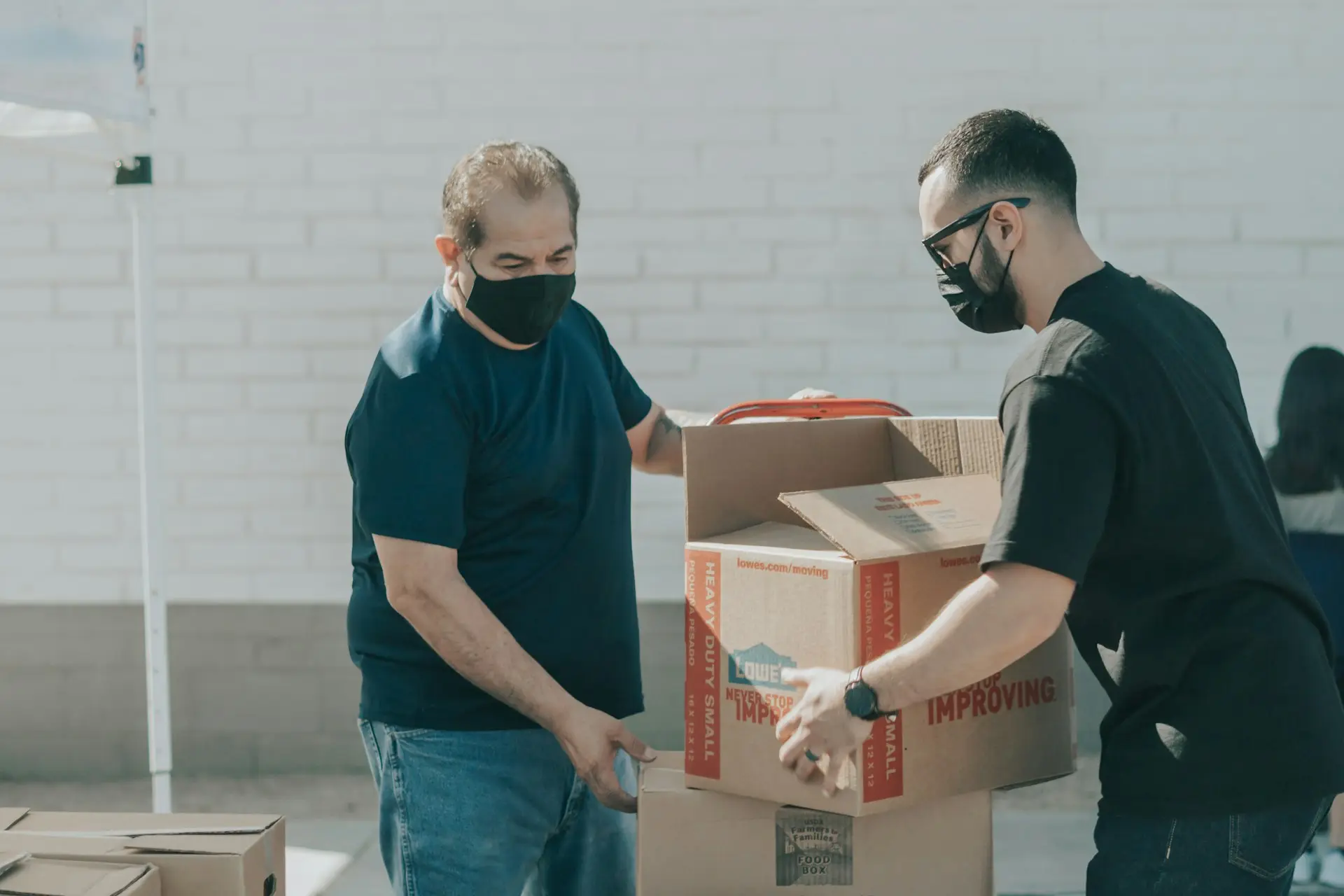
In one week, a youth baseball league gets three offers. A hardware store will donate $4,000 worth of lumber for new dugouts. A member wants to give the league his 2011 bass boat. And a local law firm offers 20 hours of free help with the league's contracts. All three are in-kind donations, and each one needs a different decision, different paperwork and a different thank-you.
An in-kind donation is a gift of goods, property, services or the use of something, instead of money. Handled well, in-kind gifts stretch your budget and bring local businesses closer to your mission. Handled casually, they fill your storage unit with things you can't use, create tax paperwork you didn't expect, and put a dollar value on receipts that shouldn't be there.
This guide covers what counts as an in-kind gift, how to decide what to accept, who is responsible for valuing it, the basics of IRS Forms 8283 and 8282, and how to record and acknowledge noncash gifts. It summarizes federal rules for organizations that can receive tax-deductible contributions; check state rules and your own situation with a tax professional.
What Counts as an In-Kind Donation
Most in-kind gifts fall into five groups. The distinction matters because the donor's tax treatment differs by type, even when the gift is equally valuable to you.
| Type | Examples | Can the donor claim a charitable deduction? | What your acknowledgment says |
|---|---|---|---|
| New goods | Sports equipment, printer paper, school supplies, food for an event | Generally yes, based on fair market value | Description and quantity, no value |
| Used goods | Furniture, laptops, clothing, a piano | Generally yes; clothing and household items must be in good used condition or better | Description and condition, no value |
| Vehicles and high-value property | Cars, boats, artwork, real estate | Yes, with extra rules and often an appraisal | Description; special forms may apply |
| Professional services | Legal advice, graphic design, accounting, photography | No, the value of time and services isn't deductible | Description of the services |
| Use of property | Free use of a meeting room, a vacation home for an auction, a loaned truck | No, the right to use property isn't deductible | Description of what was provided |
The deduction rules come from IRS Publication 526, which says donors can't deduct the value of their time or services and that contributing the right to use property is a partial interest that isn't deductible. Donors may be able to deduct some out-of-pocket expenses connected with their volunteer work, which is a separate question.
Two related categories are often confused with in-kind gifts:
- Volunteer time. Hugely valuable, but not a deductible gift for the volunteer. Track hours for your annual report, not as donations. For finding and keeping volunteers, see our guide to volunteer recruitment.
- In-kind sponsorship. When a business provides goods or services in exchange for recognition, such as logo placement at an event, you're managing a sponsorship relationship. Our guide to event sponsorship covers those agreements.
Decide What to Accept With a Gift Acceptance Policy
The hardest part of in-kind giving is saying no. A donated item that doesn't fit your work costs you storage, staff time, insurance, disposal fees and sometimes a donor relationship when you later throw it away. A short written gift acceptance policy turns that awkward conversation into a routine one: "Our board policy doesn't let us accept used mattresses, but here's a group that does."
The IRS asks about this on Form 990. Schedule M, which organizations complete when they report more than $25,000 in noncash contributions, asks whether you have a gift acceptance policy that requires review of nonstandard contributions. Even if you never file Schedule M, the question is a good prompt.
Questions to Ask Before Saying Yes
Run every non-routine offer through these questions:
- Do we need it? Is it on our wish list, or would we buy it if we had the money?
- Can we use it as is? Consider condition, compatibility, safety recalls and age.
- What will it cost us? Delivery, storage, installation, maintenance, insurance and eventual disposal.
- Are there strings attached? Restrictions on use, naming requests, or expectations about publicity.
- Will we keep it or sell it? If you plan to sell, the donor should know before giving, because it can affect their deduction.
- Is there any risk? Environmental, legal or reputational concerns, or a conflict of interest with a board member.
- Who has to approve it? Routine gifts can be accepted by staff; unusual ones need a second signature.
What to Put in the Policy
| Section | What it decides | Example wording or rule |
|---|---|---|
| Purpose | Why the policy exists | Gifts must support the mission and not create costs the organization can't carry. |
| Approval levels | Who can accept what | Staff may accept wish-list items; gifts with an estimated value over $5,000 need executive committee approval. |
| Gifts requiring review | Types that always need a closer look | Vehicles, boats, real estate, artwork, securities, perishable or hazardous items. |
| Gifts not accepted | A clear no-list | Used car seats and helmets, mattresses, items with safety recalls. |
| Selling donated items | Whether and how you monetize gifts | The organization may sell items it can't use and will tell donors in advance. |
| Valuation | Your stance on valuing gifts for donors | The organization does not appraise gifts or state values on acknowledgments. |
| Acknowledgment | Timing and responsibility | Written acknowledgment within five business days, signed by the development lead. |
| Returning or declining | How to say no or give items back | Declined items are referred to partner organizations when possible. |
Keep the policy to two pages, have the board adopt it, and review it every two years. Smaller groups, such as a PTA or booster club, can fit the essentials into a single page.
How to Decline Gracefully
A sample response you can adapt:
Thank you for thinking of us. Under our board's gift acceptance policy, we can't take [item] because [brief reason: we have no storage, we can't verify its safety, it doesn't fit our programs]. [Partner organization] accepts these items and may be able to use them. If you'd like to support [program] in another way, our current wish list is at [link].

Who Values an In-Kind Gift?
Two different values exist for the same gift, set by different people for different purposes. Mixing them up causes most in-kind mistakes.
| Purpose | Who sets the value | Basis | Where it appears |
|---|---|---|---|
| Donor's tax deduction | The donor, with an appraiser if required | Fair market value under IRS rules | The donor's tax return and Form 8283 |
| Your financial statements and Form 990 | Your organization | Fair value under your accounting method | Your books, audited statements, Form 990 and Schedule M |
| Your acknowledgment to the donor | Nobody | The acknowledgment describes the gift without a value | The receipt or letter you send |
The Donor's Value
Publication 561 defines fair market value as the price a willing buyer and a willing seller would agree on, neither being required to act and both knowing the relevant facts. For used items it points to what buyers actually pay, for example in thrift or consignment shops, and it lists the cost or selling price of the item, sales of comparable properties, replacement cost and appraisers' opinions as factors.
The publication is clear that supporting the value on a tax return is the donor's responsibility. That's why your acknowledgment describes the gift and leaves the number out. If a donor asks what something is worth, you can point them to Publication 561 or suggest they ask an appraiser or their tax preparer.
Your Organization's Value
Your organization still needs a value for its own books. Under US accounting standards for nonprofits, ASU 2020-07 requires that contributed nonfinancial assets appear as a separate line item in the statement of activities, with disclosures such as the type of asset, whether it was used or sold, and the valuation technique. Smaller organizations that don't prepare GAAP statements should still record a reasonable value with a note on how they arrived at it.
A Worked Example
A technology company donates ten refurbished laptops to your after-school program. Its letter says they're "worth $6,000," which was the retail price when new.
- Your acknowledgment says: "Ten refurbished laptops, [model], 8 GB memory, received March 9, 2026, in good working condition." No value.
- Your treasurer checks prices for comparable refurbished laptops from three online sellers, finds an average of $280, and records $2,800 with screenshots saved in the gift file.
- The donor decides what to claim, and because the claim is over $500, the donor completes Form 8283.
Neither number is wrong. They answer different questions.
Form 8283 and Form 8282 Basics
Most small gifts never involve IRS forms on your side. Larger ones can. Here's what applies to the donor at each level, based on Publication 526 and the Form 8283 instructions:
| Donor's claimed deduction | What the donor needs | Your role |
|---|---|---|
| Under $250 | A receipt with your name and address, the date and location of the gift, and a description | Provide the receipt |
| $250 to $500 | Your contemporaneous written acknowledgment | Provide the acknowledgment |
| Over $500 up to $5,000 | Form 8283, Section A, with their return | Provide the acknowledgment; no signature on the form |
| Over $5,000 (per item or group of similar items) | A qualified appraisal and Form 8283, Section B | Sign Part V, Donee Acknowledgment |
| Over $500,000 | Form 8283, Section B, with the appraisal attached to the return | Sign Part V |
Vehicles, boats and airplanes claimed at more than $500 follow separate rules, including Form 1098-C. Publicly traded securities are reported in Section A even when they exceed $5,000. If you accept vehicles regularly, read IRS Publication 4302 first.
What Signing Part V Means
Part V must be signed by an official authorized to sign your tax returns or a person specifically designated to sign Form 8283. By signing, your organization confirms it's a qualified organization, gives the date it received the property, and states whether it intends to use the property for an unrelated purpose. The form says the acknowledgment doesn't represent agreement with the claimed fair market value. You're confirming receipt, not the number.
The unrelated-use question matters. If you plan to sell a donated painting rather than display it, check "Yes." Publication 526 explains that the donor's deduction for tangible personal property put to an unrelated use is generally limited, so donors deserve to know your plans before they give.
When You Must File Form 8282
If you sell, exchange, consume or otherwise dispose of property within three years after you received it, and the donor's Form 8283 Section B was involved, you generally must file Form 8282 within 125 days of the disposition and give the donor a copy. According to the form's instructions, there are two exceptions:
- items the donor identified on Form 8283 as appraised at $500 or less, and
- items consumed or distributed without payment to carry out your exempt purpose, such as relief supplies handed out after a disaster.
The penalty for failing to file is generally $50 per form, and a separate $10,000 penalty can apply for knowingly misidentifying unrelated use as related use. Keep a copy of every Section B you sign.
Sample timeline: a donor gives you a painting on March 3, 2026, and claims $8,000. You sign Part V. On October 10, 2027, you sell it at your gala auction. Because that's within three years, Form 8282 is due within 125 days, by February 12, 2028. For auction-specific valuation and buyer receipts, see our guide to running a silent auction.
Recording In-Kind Gifts
Good records protect both you and the donor. Capture these fields for every noncash gift:
| Field | Why it matters |
|---|---|
| Donor and contact | Links the gift to the relationship and to future asks |
| Date and location received | Required on receipts; starts the three-year clock |
| Description, quantity, condition | Required on acknowledgments; supports your valuation |
| Donor-stated value (if offered) | Context only; never copied onto the acknowledgment |
| Your recorded value and method | Supports your books and Form 990 |
| Restrictions and intended use | Shows whether you'll use, distribute or sell the item |
| Form 8283 Section B signed? | Flags the gift for possible Form 8282 filing |
| Disposition date and proceeds | Completes the record if you sell or discard the item |
| Acknowledgment sent | Date and who sent it |
A simple workflow keeps it consistent. Whoever receives the item logs it the same day and photographs it. The program lead confirms whether you'll use it. The treasurer records a value and method. The development lead sends the acknowledgment within your policy deadline. Then, once a year, someone reviews all gifts with signed Section B forms for any upcoming disposals.
In campai, donations and fundraising let you record an in-kind gift with the item, its origin and a value, then create the acknowledgment as a PDF from your own template. Use the value for your internal records and set up your in-kind template to describe the gift without stating it, because your organization is responsible for the acknowledgment's wording. Assets, inventory and accounting entries are managed separately.
Acknowledging In-Kind Gifts
Your acknowledgment should name your organization, describe the item in enough detail that a stranger would recognize it, give the date and location of the gift, and say whether you provided anything in return. Our guide to donation receipts covers the full IRS requirements and templates for every gift type. Two short examples specific to in-kind giving:
Donated goods:
Thank you for donating 40 youth baseball helmets (new, in original packaging) to [Organization name], received on April 2, 2026, at our equipment shed at [location]. No goods or services were provided in exchange for this contribution. This acknowledgment describes your gift but does not state its value. Your helmets will equip every player in our spring league.
Donated services:
Thank you for providing 20 hours of pro bono legal review of our facility rental agreements between January and March 2026. No goods or services were provided in exchange. Your expertise saved our volunteers weeks of work.
The services letter is a thank-you, not a tax receipt, because the value of services isn't deductible. Don't put an hourly rate in it. For the warmer, personal side of thanking, see donation thank-you letters.
Asking for the In-Kind Gifts You Actually Need
The best in-kind gifts are the ones you request. A specific ask brings in useful items and fewer surprises:
- Publish a wish list with exact items, quantities and the program each one supports. "Six folding tables for the Saturday food distribution" beats "furniture."
- Ask local businesses for what they already have, such as printing, catering, meeting space or equipment. A short, specific letter works better than a general appeal; our sponsorship request letter guide has a format you can adapt.
- Tie requests to events. Raffle prizes, auction items and refreshments are natural in-kind asks.
- Close the loop. Send photos of the items in use. Businesses that see their gift at work are far more likely to give again.
Reporting the Impact of In-Kind Gifts
Dollar values tell part of the story. Your donors and board also want to know what happened: how many families received coats, how many players used the new equipment, how many hours the donated software saved. Include an in-kind section in your nonprofit annual report with both the recorded value and a few outcome numbers, and thank major in-kind donors by name if they agree.
Frequently Asked Questions
Are in-kind donations tax-deductible?
Donated goods and property generally are, at fair market value, for donors who itemize and give to an organization eligible to receive deductible contributions. Donated services and the free use of property aren't deductible. The non-itemizer deduction that starts in tax year 2026 applies only to cash gifts, not to property.
Do we have to put a value on an in-kind donation receipt?
No. The IRS requires a description of the property but not its value, and Publication 1771 specifically says the acknowledgment should not include it. Keep your own recorded value in your books.
Can we sell donated items?
Yes, if your policy allows it. Tell donors in advance, because selling tangible property instead of using it can limit their deduction. If you sell an item within three years and you signed Section B of the donor's Form 8283, you generally must file Form 8282.
Is volunteer time an in-kind donation?
Not for tax purposes. Volunteers can't deduct the value of their time. You can and should report volunteer hours as part of your impact.
Do we need an appraisal for donated items?
Your organization doesn't. The donor generally needs a qualified appraisal if they claim more than $5,000 for an item or group of similar items. Appraisals are the donor's responsibility.
Next Steps
- Draft or update your gift acceptance policy using the table above, and put it on the next board agenda.
- Publish a specific wish list on your website and share it with your business partners.
- Add the in-kind fields to your donor records so every gift has a description, date, condition and intended use.
- Create an in-kind acknowledgment template that describes the gift without a value.
- Calendar a yearly review of any gifts with signed Form 8283 Section B forms, so no Form 8282 deadline slips by.