
Giving Tuesday Ideas: 24 Ways to Plan, Promote and Follow Up
Giving Tuesday ideas for US nonprofits, clubs and associations: how the date works, a 10-week plan, honest matching gifts, 24 ideas and the follow-up after.
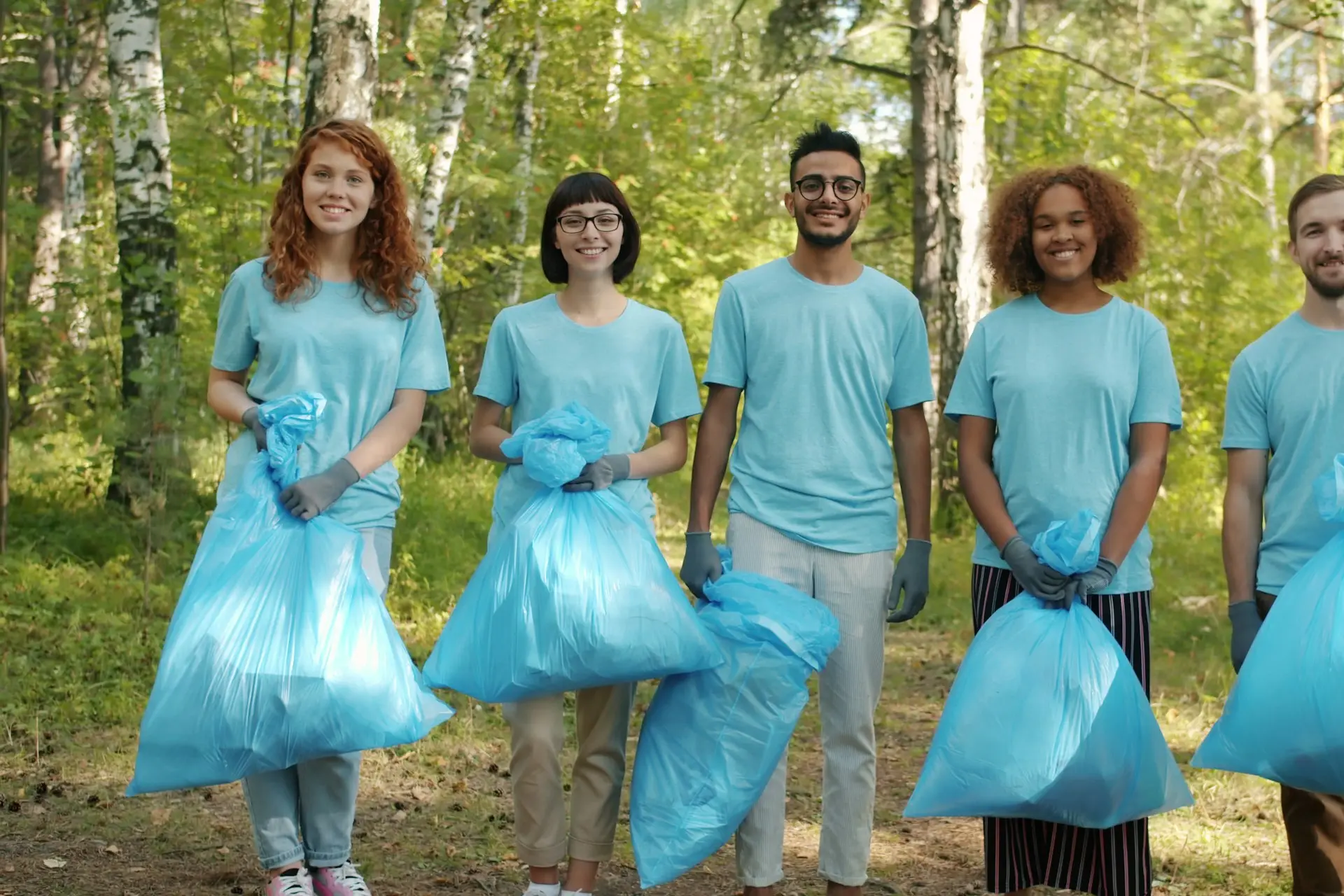
A high school booster club wants to raise $8,000 for new team uniforms. Last year it posted "Happy Giving Tuesday!" on social media at noon and received three donations. This year, the treasurer has lined up a $2,500 match from a local auto shop, the team captains' parents have agreed to share a personal fundraising link, and the club has a plan for every hour of the day.
That's the difference a plan makes. Giving Tuesday is a global day of generosity held every year on the Tuesday after US Thanksgiving. In 2026 it falls on December 1. Participating is free, there's no registration, and you raise money through your own donation page. What works is a focused goal, a reason to give today (usually a match), several voices asking on your behalf, and a follow-up plan that turns one-day donors into long-term supporters.
This guide covers how Giving Tuesday works, a 10-week plan with 2026 dates, how to set up a matching gift honestly, 24 campaign, promotion and follow-up ideas, an hour-by-hour plan for the day, and what to do afterward.
What Giving Tuesday Is and How It Works
GivingTuesday (the organizers write it as one word) was created in 2012 at the 92nd Street Y in New York City and is now an independent nonprofit and global movement, according to GivingTuesday's own description. The National Park Service describes the day as always the Tuesday after Thanksgiving, and since Thanksgiving is the fourth Thursday in November, Giving Tuesday always lands between November 27 and December 3.
| Year | Thanksgiving | Giving Tuesday |
|---|---|---|
| 2026 | Thursday, November 26 | Tuesday, December 1 |
| 2027 | Thursday, November 25 | Tuesday, November 30 |
The GivingTuesday FAQ answers the questions small organizations ask most:
- Cost: There's no fee to participate. Your donation platform may charge its usual transaction fees.
- Registration: Not required. You direct supporters to your own website, donation page or social channels. Local GivingTuesday community campaigns may have their own sign-up.
- Platform: You can use whatever donation tools you already use.
- Eligibility: Organizations that aren't registered charities can participate. In the US, the FAQ says that's fine as long as you clearly tell supporters that their gifts aren't tax-deductible.
A note for chambers, HOAs, clubs and booster clubs
Not every member-based organization is a 501(c)(3). Under IRS Publication 557, many other tax-exempt organizations, including 501(c)(4), (c)(6) and (c)(7) groups, must include a conspicuous statement that payments aren't deductible as charitable contributions when they solicit, if they normally have gross receipts over $100,000 a year and the solicitation is made in writing, by phone or by broadcast as part of a coordinated campaign reaching more than 10 people. Even if that rule doesn't apply to you, say it plainly. If your chamber or association has a related charitable foundation, Giving Tuesday is a natural day to feature it.
Where Giving Tuesday fits in your year-end plan
Giving Tuesday is the opening day of the December giving season, not a separate campaign. Use the same story and visuals as your year-end giving campaign, and treat December 1 as the kickoff that builds momentum toward December 31.
Decide What Your Giving Tuesday Is For
Pick one primary goal. Trying to raise money, recruit volunteers, collect coats and grow your email list on the same day splits attention.
| Primary goal | What to measure | Example target |
|---|---|---|
| Dollars for a specific need | Amount raised | $8,000 for 40 uniforms |
| New donors | First-time donors | 75 new donors |
| Monthly donors | New recurring sign-ups | 25 new monthly donors at $15 or more |
| Participation | Total number of donors | One gift from every team family |
| In-kind or volunteer support | Items or hours pledged | 300 winter coats; 100 volunteer hours |
Set the target from your own history. If you raised $3,000 from 40 donors last year, a goal of $5,000 to $6,000 with a match is ambitious but believable. If this is your first year, build the goal from the people you can personally reach: board members, volunteers, members and past donors.
Tie the goal to something countable. "Help us reach $8,000" is abstract; "$200 outfits one player; help us outfit 40" lets donors see exactly what their gift does.
Plan the Campaign in 10 Weeks
| When (2026 dates) | Tasks |
|---|---|
| 10 to 8 weeks out (September 21 – October 9) | Set the goal and story, name a campaign lead, list potential matching donors |
| 7 to 5 weeks out (October 12 – October 30) | Secure the match in writing, build or update the donation page, take photos and short videos |
| 4 to 3 weeks out (November 2 – November 13) | Write and schedule emails, draft social posts, prepare an ambassador kit, test the donation page on a phone |
| 2 weeks out (November 16 – November 20) | Send a save-the-date email, brief board and volunteers, confirm who's on duty on the day |
| Thanksgiving week (November 23 – November 27) | Light teaser posts; ask board members to give early so you can open with momentum |
| Monday, November 30 | "Tomorrow" email, final checks on the page, match and progress bar |
| Tuesday, December 1 | Run the day (see the hourly plan below) |
| December 2 – 4 | Thank-you messages, results post, first acknowledgments |
| December 7 – 31 | Steward new donors; continue the year-end campaign |
If you have four weeks or less
Skip the elaborate content. Secure one match, put a progress bar on your existing donation page, write four emails (save the date, morning launch, afternoon update, evening last call), recruit five ambassadors, and plan your thank-you message before the day starts.

Make Matching Gifts Work
A match gives donors a reason to give today rather than "sometime in December." It also gives a major donor or local business a visible way to lead.
Choose a match structure
| Structure | Example | Best for |
|---|---|---|
| Dollar-for-dollar up to a cap | Board members pool $5,000; every gift is matched until $5,000 is reached | Most campaigns |
| Power hour | A local business matches gifts from noon to 1 p.m., up to $1,000 | Creating a midday spike |
| Donor-count unlock | A family foundation gives $2,500 once 100 people have given | Participation goals |
| Monthly donor match | A sponsor matches the first three months of every new monthly gift | Growing recurring giving |
| Challenge between groups | Two teams, grades or chapters compete; the matcher funds the winner's project | Schools, sports clubs, multi-chapter organizations |
Put the terms in writing
Before you announce a match, confirm these points by email or letter with the matching donor:
- Total amount and ratio (for example, $5,000 at 1:1).
- Which gifts count: online only, or checks and cash too? Do first payments of new monthly gifts count?
- Start and end time, with the time zone.
- What happens if donors don't unlock the full match: does the matcher give the full amount anyway, or only the matched portion?
- How and when the matcher pays, and how they want to be recognized (or kept anonymous).
Keep your messaging accurate
Say "up to," state the cap and update progress publicly. When the cap is reached, stop saying gifts will be doubled and thank the matcher instead: "We unlocked the full $5,000 match. Every gift now goes straight to the uniform fund." If the matcher agreed to give the full amount regardless, you can say the match is secured; don't imply that a gift will unlock money that's already committed.
The matching donor receives their own acknowledgment for their gift. Each individual donor's acknowledgment covers only their own contribution, never the matched amount.
Don't forget employer matching
Some employers match their employees' charitable gifts under their own rules and deadlines. Add a line to your confirmation email: "Does your employer match gifts? Check with your HR team." It costs nothing, and the company handles the process.
24 Giving Tuesday Ideas
Use the tables below as a menu. A small organization should pick three to five ideas and do them well.
Campaign ideas
| # | Idea | How it works | Best for |
|---|---|---|---|
| 1 | Countable goal | "$25 feeds a family for a week; help us feed 200 families" | Any organization with a unit cost |
| 2 | Matching gift | Board, business or foundation matches gifts up to a cap | Most campaigns |
| 3 | Power hours | Several sponsors each match one hour of the day | Organizations with several local business partners |
| 4 | Monthly donor drive | Recruit new monthly donors with a founding offer; see our monthly giving program guide | Shelters, food banks, faith communities |
| 5 | Board challenge | Announce 100% board participation at 8 a.m. | Any nonprofit with a board |
| 6 | Peer-to-peer pages | Volunteers, parents or members create personal fundraising pages; see peer-to-peer fundraising | Booster clubs, PTAs, sports clubs |
| 7 | Team or class challenge | Groups compete on donor count, not dollars | Schools, alumni associations, chapters |
| 8 | Member add-on | Members add a gift to their dues or to the association's foundation | Associations and chambers with a foundation |
| 9 | Wish list | Donors buy specific items: instruments, jerseys, laptops; see in-kind donations | Arts groups, youth programs |
| 10 | Collection drive | Coats, food or school supplies, for people who prefer to give goods | HOAs, clubs, faith communities |
| 11 | Volunteer pledge | People commit hours instead of dollars | Organizations short on volunteers |
| 12 | Unlock a story | Each milestone reveals a new video or update | Organizations with strong program stories |
Promotion ideas
| # | Idea | How it works |
|---|---|---|
| 13 | Save-the-date email | Sent about a week out, with the goal and the match |
| 14 | Live progress bar | Updated hourly on your donation page and in social posts |
| 15 | Ambassador kit | Sample texts, emails and images for board members and volunteers to send to their own contacts |
| 16 | Different voice every email | Executive director in the morning, a participant at midday, the board chair at night; fundraising email templates has examples |
| 17 | Short behind-the-scenes video | A rehearsal, practice or pantry shift filmed on a phone |
| 18 | Countdown posts | "Seven days to Giving Tuesday" posts with one fact each; see social media post ideas |
| 19 | Board phone tree | Each board member calls or texts 10 people they know |
| 20 | Local partners | Businesses share your link with their customers; if they promise a share of sales, check your state's rules for those promotions first |
Follow-up ideas
| # | Idea | How it works |
|---|---|---|
| 21 | Same-day thank-you | Results and gratitude sent before midnight or first thing the next morning |
| 22 | Impact update in two weeks | Show what the money already bought or started |
| 23 | Monthly giving invitation | About 30 days later, invite new donors to give monthly |
| 24 | First-time donor welcome | A short welcome series and a personal note; see donor stewardship |
Run the Day Hour by Hour
Use your local time zone throughout and state it in every deadline ("until 11:59 p.m. Eastern").
| Time | Action | Owner |
|---|---|---|
| 7:00 a.m. | Launch email with goal, match and countable outcome | Communications lead |
| 8:00 a.m. | Board participation announcement; ambassadors start sharing | Board chair |
| 10:00 a.m. | Social post with the first progress update | Social media volunteer |
| Noon | Match update or power hour start; short video | Campaign lead |
| 3:00 p.m. | Personal texts and calls from board members to their own contacts | Board |
| 5:00 p.m. | Update email to non-donors: "We're 70% there" | Communications lead |
| 8:00 p.m. | Participant story post | Social media volunteer |
| 10:00 p.m. | Last-call email to non-donors | Communications lead |
| 11:59 p.m. | Close the campaign; draft the results message | Campaign lead |
Assign one person to watch the donation page all day, test it every few hours and answer donor emails. Keep the progress bar honest: update it from actual received gifts, not pledges you hope to collect.
If you send the emails through campai, you can schedule each message in advance, send to saved segments so donors drop out of later appeals, and check delivery status from the communication tools.
Follow Up After Giving Tuesday
The day ends at midnight; the relationship doesn't.
- Thank everyone within 48 hours. Share the total, the number of donors and what happens next.
- Send acknowledgments. Under IRS Publication 1771, any single gift of $250 or more needs a written acknowledgment. The donation receipt guide lists the required wording. campai can link incoming payments to donations and create PDF acknowledgments in batches.
- Segment Giving Tuesday donors in your year-end campaign. Thank them for their December 1 gift and offer an optional extra gift rather than an appeal that ignores it.
- Wait before the next big ask for first-time donors. A welcome and an impact update should come first.
- Write a one-page debrief while it's fresh: amount, donors, new donors, match result, which emails and posts drove gifts, what broke.
For booster clubs and PTAs, the same plan scales down well; see how campai supports PTAs and booster clubs with member records, payments and messages in one place.
Frequently Asked Questions
When is Giving Tuesday 2026?
Giving Tuesday 2026 is on Tuesday, December 1, 2026, the Tuesday after Thanksgiving. In 2027, it falls on Tuesday, November 30.
Does our nonprofit have to register for Giving Tuesday?
No. According to the GivingTuesday FAQ, participation is free and open, and you simply direct supporters to your own website or donation page. Some local GivingTuesday community campaigns have their own sign-up.
Can an organization that isn't a 501(c)(3) participate?
Yes. GivingTuesday welcomes any organization, but in the US you must make clear that gifts aren't tax-deductible. Some tax-exempt organizations, such as chambers and social clubs above certain size thresholds, are required by the IRS to include a nondeductibility statement in their solicitations.
How big should a Giving Tuesday matching gift be?
Big enough to feel meaningful and small enough to unlock. A practical approach is to size the match around what you raised on Giving Tuesday last year, then set the public goal at roughly the match plus that amount. First-year organizations can start with a match from the board.
Should we include Giving Tuesday donors in our year-end appeal?
Yes, but as a separate segment. Thank them for their December 1 gift, share early results and offer an optional extra gift. Don't send them the same "please give before December 31" letter as people who haven't given.
What if we don't reach our Giving Tuesday goal?
Report honestly, thank donors for what they made possible and roll the remaining need into your year-end campaign. Check your agreement with the matching donor to see how an unfinished match is handled.
Next Steps
- This week: Pick one goal, one countable outcome and one story, and name a campaign lead.
- Within 10 days: Ask two or three potential matching donors and confirm the terms in writing.
- By mid-November: Update and test your donation page, schedule emails and prepare an ambassador kit.
- Thanksgiving week: Collect board gifts so you can open December 1 with momentum.
- December 2 onward: Thank donors within 48 hours, send acknowledgments and fold Giving Tuesday donors into your year-end plan as their own segment.