
Association Networking: In-Person and Virtual Formats That Work
Association networking that builds real connections: in-person and virtual formats, facilitation, icebreakers, structured matching, follow-up and metrics.
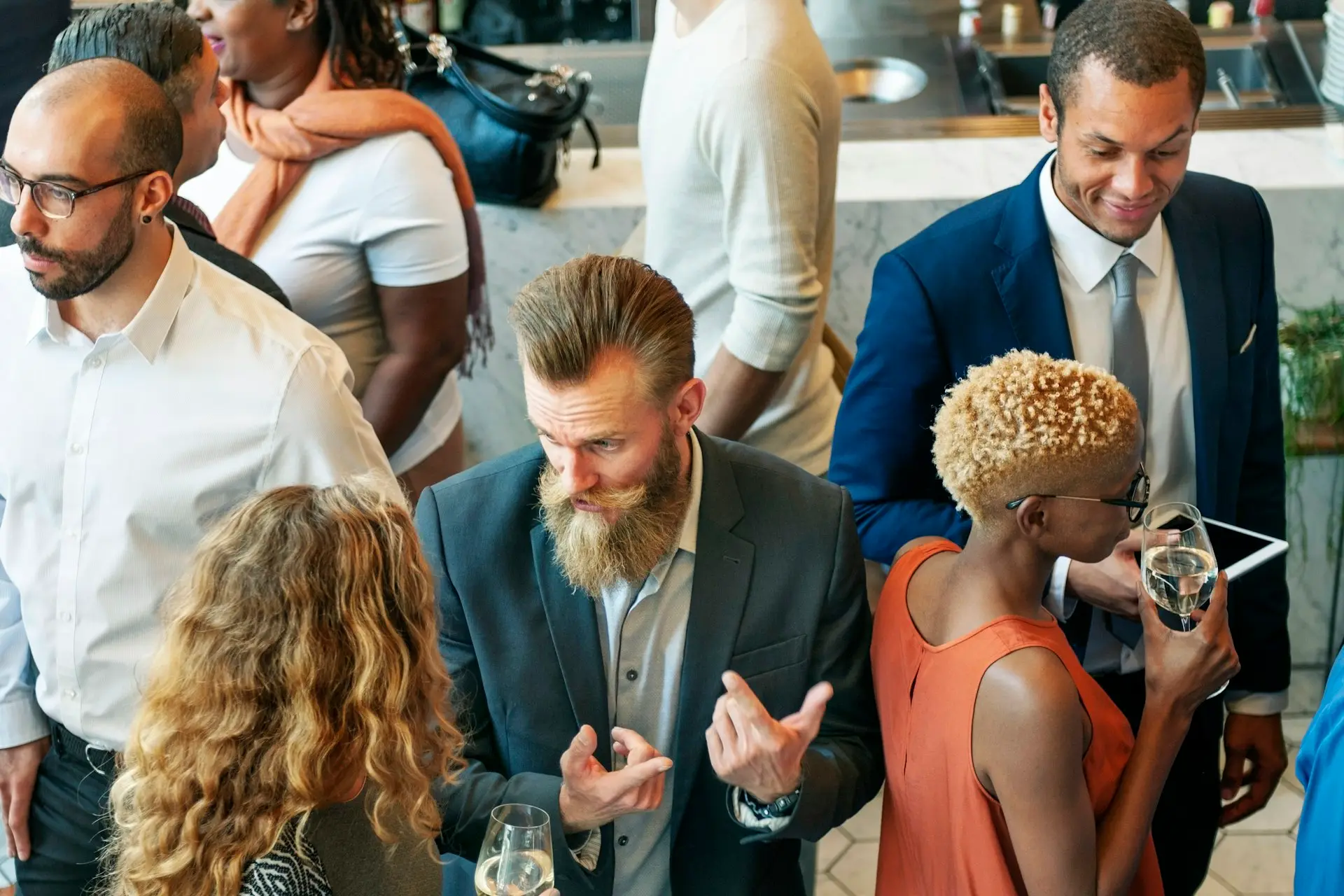
Watch the room at a typical chamber mixer. Eighty people arrive, pick up a drink and drift toward the people they already know. The board members cluster near the bar, regulars hold their usual corner, and the six first-time attendees stand near the door checking their phones before leaving early. Afterward, everyone says the mixer was nice. Almost nobody met anyone new.
Networking is one of the main reasons people join professional associations, chambers and clubs, yet many organizations leave it to chance. Association networking works when you design it: choose the right format for the goal, facilitate the first conversations, match people deliberately, help them follow up and measure whether real connections formed. That applies whether you meet in a hotel ballroom, a brewery or a video call.
This guide covers in-person and virtual formats, facilitation techniques, icebreakers, structured matching, follow-up and measurement. For ideas beyond networking, see our list of member engagement ideas.
Start With What Members Want From Networking
"Networking" means different things to different members. A new graduate wants a mentor. A business owner wants referrals. A mid-career specialist wants peers who face the same problems. A retiree in a garden club wants friends. One format can't serve them all.
Ask at registration or in your member survey: "What do you most hope to get from connecting with other members?" Then match formats to the answers.
| Member goal | Formats that serve it | Example |
|---|---|---|
| Find clients or referrals | Structured referral rounds, member showcases, business mixers with hosts | Chamber "referral breakfast" with 60-second introductions |
| Learn from peers | Roundtables, peer circles, topic tables | Quarterly roundtable for HR managers at firms under 100 employees |
| Find a mentor or career help | Mentoring programs, career speed rounds, office hours | Alumni career night pairing graduates with volunteers in their field |
| Make friends and feel part of the group | Shared activities, small dinners, service projects | Car club's Saturday drive followed by lunch |
| Meet leaders and decision-makers | Hosted dinners, committee work, VIP receptions | Trade association legislative reception |
| Get integrated as a newcomer | First-timer orientation, buddy systems, welcome tables | A 20-minute newcomer meetup before the annual conference opens |
Two patterns show up in most organizations. Newcomers need structure most, because they don't know anyone yet. And veterans need a reason to mix, because talking to old friends is comfortable. Good design addresses both.
In-Person Networking Formats
Choose the format by the goal, the group size and the facilitation you can provide.
| Format | Group size | Length | Best for | Facilitation needed |
|---|---|---|---|---|
| Hosted mixer | 30–150 | 90 minutes | Broad visibility, community feel | Medium: hosts who make introductions |
| Speed networking | 20–80 | 45–60 minutes | Meeting many people quickly | High: timekeeper and clear rotation |
| Topic roundtables | 6–10 per table | 60–90 minutes | Peer learning and deeper conversation | Medium: a table host per topic |
| Breakfast or lunch with table hosts | 30–120 | 60–90 minutes | Regular, low-pressure connection | Low to medium |
| Peer circles | 6–10, same group each time | 90 minutes, monthly or quarterly | Trust and long-term relationships | Medium: trained facilitator |
| Hosted dinners | 6–10 per dinner | 2 hours | Relationships with leaders and new members | Low: a host and a reservation |
| Site visits and tours | 10–30 | 1–2 hours | Shared experience, industry insight | Low |
| Service projects | 10–100 | 2–4 hours | Bonding through shared work | Medium: project lead |
| First-timer reception | 10–40 | 30 minutes before a main event | Integrating newcomers | Medium: welcome team |
Design the room for conversation
Room setup affects networking more than most organizers realize:
- Use high-top tables and clusters instead of rows of chairs or long banquet tables.
- Keep the music low enough to talk at normal volume.
- Spread out the food and drinks so people move around rather than queuing in one corner.
- Create a quieter area with seating for people who find crowds draining or can't stand for long.
- Make name badges readable: first names large, organization and an "Ask me about..." line smaller underneath.
- Mark first-timers with a ribbon or badge color, and brief your hosts to look for them.
Choose a venue that is accessible to members with disabilities, plan for dietary needs, and always offer appealing nonalcoholic drinks. If you serve alcohol, ask your insurer and venue about liability before the event.
Virtual Networking Formats
Virtual networking widens your reach to members in rural areas, members with caregiving duties and members spread across time zones. It also needs more structure than in-person networking, because nobody can drift across a video call to join a conversation.
| Format | Group size | Length | How it works |
|---|---|---|---|
| Virtual speed networking | 3–4 per breakout room | 45–60 minutes | Several timed rounds in small breakout rooms, reshuffled each round |
| Topic breakout rooms | 5–8 per room | 30–45 minutes | Participants choose a topic room with a host |
| Virtual coffee pairs | 2 | 20–30 minutes | Members opt in and get a new partner each month to meet on their own schedule |
| Online peer circles | 6–8 | 60–75 minutes, monthly | The same small group meets regularly with a facilitator |
| Expert office hours | 5–15 | 45 minutes | A senior member answers questions, then participants connect |
| Asynchronous introductions | Unlimited | Ongoing | Members post introductions and offers in your online community |
Whatever video tool you use, make sure it supports breakout rooms you can assign or let people choose, a co-host role for your facilitators, captions and moderated chat. Make cameras optional and say so in the invitation.
A 60-minute virtual networking run of show
| Time | Segment | What happens |
|---|---|---|
| 0:00–0:05 | Welcome | Host greets people by name as they arrive and asks them to add their name, organization and location to their display name |
| 0:05–0:10 | How it works | Host explains the rounds, the prompt for each round and the code of conduct |
| 0:10–0:19 | Round 1 | Breakout rooms of three, eight minutes, plus one minute to move |
| 0:19–0:28 | Round 2 | New groups of three, new prompt |
| 0:28–0:37 | Round 3 | New groups of three, new prompt |
| 0:37–0:50 | Topic rooms | Participants choose one of four topics, each with a host |
| 0:50–0:57 | Main room | Two or three people share one useful thing they heard |
| 0:57–1:00 | Next steps | Host explains follow-up: contact sharing for those who opted in and the next event |
Groups of three work better than pairs online: if one person has a bad connection, the conversation continues. For larger online events with sessions and sponsors, see our guide to running a virtual conference. Asynchronous introductions need a home; our guide to building an online community for members covers how to set one up and keep it active.
Hybrid networking
When an event has both in-person and online attendees, run separate networking for each group rather than trying to mix them in one session. A laptop on a table rarely gives the remote participant a real conversation. Offer the online group its own facilitated breakout, and connect the two groups afterward through shared contact lists or a follow-up session.

Facilitation Techniques That Get People Talking
The most effective networking tool costs nothing: volunteers whose job is to introduce people.
Recruit and brief connectors
Ask one volunteer connector (or host) for every 12 to 15 expected attendees. Choose members who know many people and enjoy talking. Before the event, give them:
- The attendee list with first-timers highlighted and, if you collected them, each person's goals
- Five people they should personally meet and introduce
- A simple introduction formula: name, what they do, and why the two people should talk
A good introduction gives both people a reason to continue: "Maria, this is Dev. He just opened a second location in Midtown, and you mentioned you're hiring for your new office there. You two should compare notes on finding staff."
Give conversations a starting point
- "Ask me about..." badges let people write one topic they want to discuss.
- Prompt cards on tables offer two or three questions to start.
- Timed rounds with a chime make it easy to move on without awkwardness.
- Open circles: encourage groups to stand in a horseshoe with a gap, so newcomers can join.
Make it easier for introverts and newcomers
- Offer an early arrival meetup for first-timers before the room gets loud.
- Use structured formats with clear prompts; many people find them easier than open mingling.
- Provide seated options and small-group formats.
- Pair newcomers with a buddy for the first 30 minutes.
- Teach a graceful exit line in your welcome: "It's fine to say, 'I'm going to say hello to a few more people. Great to meet you.'"
Icebreakers That Don't Make People Cringe
Good icebreakers are quick, relevant to your members and voluntary. They give people something to talk about, not a performance.
| Icebreaker | How it works | Best for | Time |
|---|---|---|---|
| Problem swap | Each person shares one current challenge; the others offer one idea each | Professional groups, peer circles | 10 minutes for groups of three |
| One win, one wall | Share one recent win and one obstacle | Small groups, virtual rooms | 6–8 minutes |
| Give and get | Each person names one thing they can offer and one thing they're looking for | Referral-focused groups, chambers | 8 minutes |
| Map pins | Mark where you live or work on a printed map, or in the chat | Large or spread-out groups | 5 minutes |
| Common ground in three | The group finds three things all members share, beyond the obvious | Mixed groups, new members | 5 minutes |
| First job | Everyone shares their first paid job and one lesson from it | Any adult group | 6 minutes |
| Best tool or resource | Each person recommends one book, tool, podcast or habit | Professional associations | 6 minutes |
| Show and tell | One object within reach that says something about you | Virtual events | 5 minutes |
| Advice I'd give my first-year self | Share one sentence of advice | Career-focused groups, alumni | 5 minutes |
| Question exchange | Everyone gets a prompt card, answers it, then swaps cards with the next person | Hosted mixers | Ongoing |
Avoid icebreakers that require physical contact, personal disclosures or public performance, and avoid trivia that makes people feel tested.
Conversation starters for members
Share a few questions on table cards or in the event app:
- "What brought you to this event?"
- "What are you working on that you're excited about?"
- "What's a challenge you're trying to solve this quarter?"
- "How did you get started in this field?"
- "Who here would you like to meet? I might be able to introduce you."
- "What's one thing this organization could do better for people like you?"
Structured Matching
Random mixing helps outgoing people meet more outgoing people. Structured matching gives everyone useful conversations by grouping or pairing people on purpose.
Collect the right information
Add a few optional questions to your registration form:
- Role or job function
- Industry, sport, hobby focus or neighborhood, depending on your organization
- Years of experience or years as a member
- "I'm looking for..." (clients, peers, a mentor, a job, friends)
- "I can help with..." (one or two topics)
- Consent: "May we share your name, organization and email with other attendees after the event?"
If you run registrations in campai, you can add these as custom form fields on the booking page and record recurring interests as tags on member profiles, so you can reuse them for the next event.
Three ways to match
- Table assignments. Before the event, sort registrants into tables that mix experience levels and roles, with at least one connector at each table.
- Give-and-get pairing. Match someone looking for X with someone who can help with X. Even five deliberate pairings per event create stories people tell others.
- Rotation plans. For roundtables or speed networking, plan rotations so people meet new faces each round.
A worked example
A regional association of engineering firms expects 48 attendees at a networking breakfast. The plan:
- 6 tables of 8, each with one connector
- 3 rounds of 15 minutes, with a different prompt each round
- After each round, people move to a new table according to a seating chart printed on their badge
In 45 minutes, each attendee meets up to 21 different people; with six tables of eight, a few repeats are unavoidable, so most will meet around 18 to 20. That is far more than most people manage in a 90-minute open mixer.
Longer-term matching
Some connections need more than an event. Mentoring programs, peer circles and buddy systems create relationships that last for months. Our guide to mentoring programs covers matching criteria and structure, and an online member directory helps members find each other between events.
Follow-Up That Turns Introductions Into Relationships
Most networking value is created or lost in the 48 hours after the event. Make follow-up easy:
- Send a thank-you email within a day with the opted-in attendee list (name, organization, profile link), any resources mentioned and the date of the next event.
- Offer introduction requests. A short form asking "Is there anyone you'd like us to introduce you to?" lets staff or connectors make warm email introductions.
- Prompt one action. Ask every attendee to send one follow-up message this week.
- Keep small groups together. Peer circles and roundtable groups can continue in a shared space between meetings, such as a team chat in the campai Community App.
- Invite them back. Every follow-up should point to the next opportunity to meet.
Here is a short follow-up note you can share with members as a template:
Hi [name],
It was good to meet you at [event] on [date]. I enjoyed hearing about [specific topic]. [Optional: Here's the article / contact / resource I mentioned.]
Would you like to [grab coffee / have a 20-minute call] in the next few weeks? I'm free [two options].
[Your name]
The wider attendee follow-up sequence, from thank-you emails to converting guests into members, is covered in our guide to post-event engagement.
Measure the Connections You Create
Attendance tells you how many people came. It doesn't tell you whether they connected. Track a few indicators:
| Metric | How to collect it | Why it matters |
|---|---|---|
| New useful contacts per attendee | One-question pulse survey: "How many people did you meet that you'll contact again?" | Direct measure of networking value |
| First-timer return rate | First-time attendees who attend again within 90 days | Shows whether newcomers felt welcome |
| Introduction requests fulfilled | Your request form and connector notes | Measures your active matchmaking |
| Repeat attendance | Registration records | Indicates ongoing value |
| Guest-to-member conversion | Nonmember attendees who join within six months | Networking as a recruitment channel |
| Renewal rate of networking participants | Compare renewal rates of members who attend networking events with those who don't | Connects networking to retention |
Our guide to post-event survey questions has more questions you can add, and member retention rate explains how to calculate renewal rates for different groups.
Example: a chamber's quarterly review
A chamber holds a monthly hosted mixer. Over one quarter, 214 people attended three mixers, 41 of them first-timers. The one-question survey showed an average of 3.2 new contacts that attendees planned to follow up with. Of the 41 first-timers, 17 came back within 90 days, a 41% return rate, and 6 of the 19 nonmember guests joined.
After the chamber added a first-timer reception and two more connectors in the next quarter, the first-timer return rate rose to 52%. Those numbers are the chamber's own, not a benchmark, but tracking them showed which change worked.
Ground Rules: Safety, Inclusion and Antitrust
Publish a short code of conduct for networking events, online and in person. It should cover respectful behavior, no harassment, how to report a problem and who to contact on site. Name a staff member or board member as the contact, and make sure they know what to do.
Set expectations about selling, too. Many chambers and business associations ask members to focus on relationships rather than pitching at networking events. Say so in the invitation.
Trade associations need antitrust awareness. When competitors meet, some topics are off limits. The FTC states that it is illegal to use a trade association to control or suggest prices of members. Brief connectors and roundtable hosts to steer conversations away from competitively sensitive topics such as pricing, bids, wages and which customers or territories each company serves. Have your legal counsel prepare written antitrust guidelines and a short statement to read at the start of roundtables.
Frequently Asked Questions
What is association networking?
Association networking is the connections members make with each other through the organization: at events, in small groups, online and through introductions. Good associations design these connections deliberately instead of hoping they happen.
How do you host a virtual networking event?
Keep it to about an hour, use small breakout rooms of three or four people, run several timed rounds with a different prompt each time, have hosts in every room or available to help, and send opted-in contact details afterward. Make cameras optional and enable captions.
How long should a networking event be?
Ninety minutes is a good length for an in-person mixer, and 45 to 60 minutes for a virtual event. Structured formats such as speed networking can deliver many conversations in under an hour.
How do you help introverts network?
Offer structure: small groups, clear prompts, timed rounds, seated areas and an early arrival meetup. Many introverts prefer a planned conversation with three people to open mingling in a crowded room.
What are good icebreakers for networking events?
Choose quick, relevant and voluntary prompts, such as sharing a current challenge, naming one thing you can offer and one thing you need, or recommending a useful resource. Avoid games that require performance or personal disclosure.
How do you measure the success of a networking event?
Ask attendees how many new contacts they plan to follow up with, track how many first-timers return within 90 days, count introductions made, and compare renewal rates of members who attend networking events with those who don't.
Next Steps
- Ask members what they want from networking in your next survey or registration form.
- Pick one format to redesign for your next event, such as adding topic tables or timed rounds.
- Recruit connectors, about one for every 12 to 15 attendees, and brief them a week ahead.
- Add matching questions and a contact-sharing consent to your registration form.
- Send a follow-up within 24 hours with the opted-in attendee list and the next event date.
- Track first-timer return rates each quarter.
If you run a chamber of commerce, see how campai handles member records, events and communication in one place.